The Great Sonic Pivot: 10 Times Artists Abandoned Everything to Find Themselves
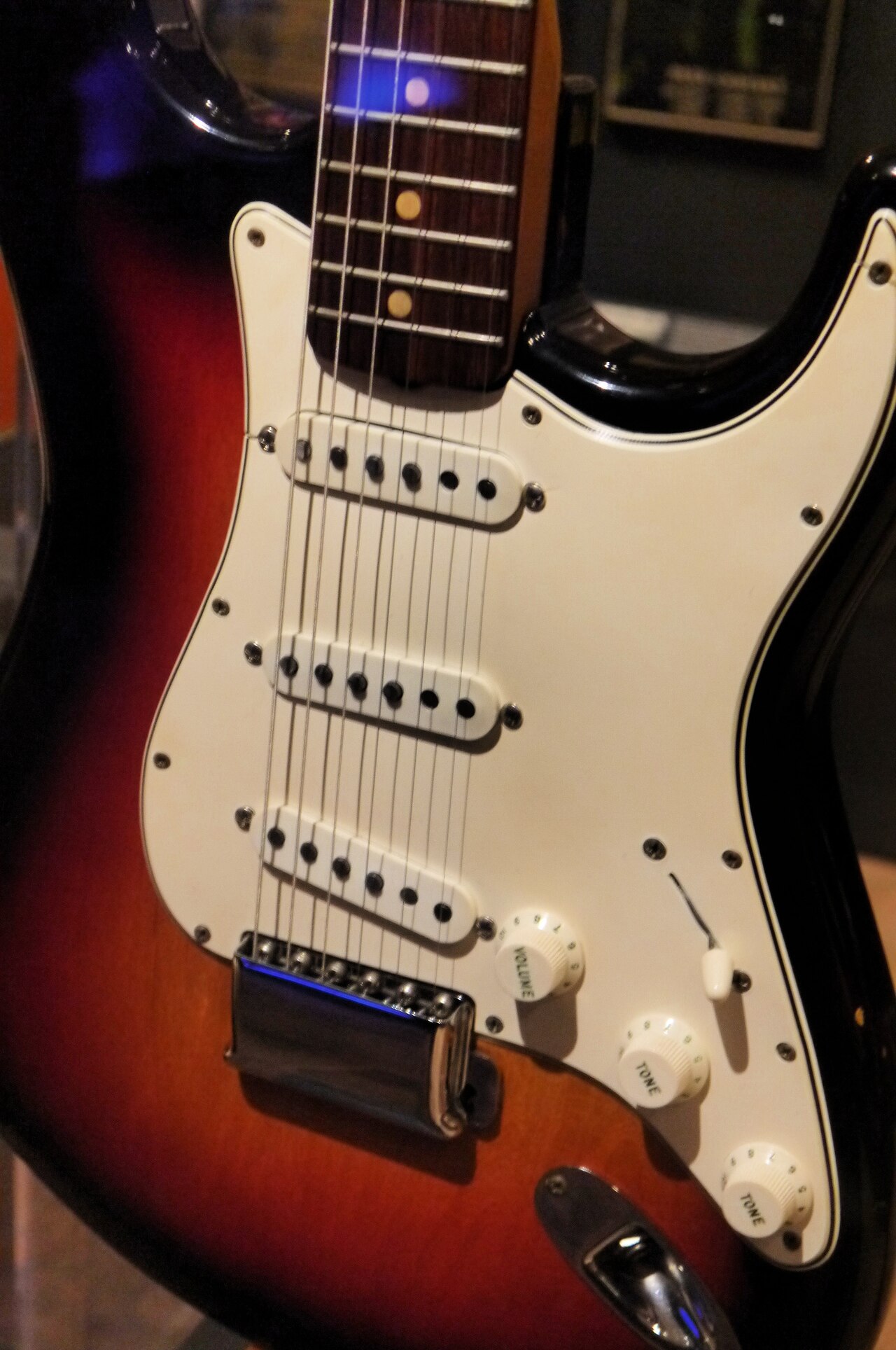
Newport, Rhode Island, screamed with indignation on a humid July night in 1965. Bob Dylan stood on the stage of the Newport Folk Festival, clutching a Fender Stratocaster that gleamed under the stage lights. He plugged into a Fender Twin Reverb amp, and the sudden, biting roar of electric blues tore through the acoustic expectations of the gathered folk purists. This moment remains the blueprint for artists who reinvented themselves, a loud, distorted rejection of the very movement that birthed him.
The crowd reacted with visceral hostility. Thousands of fans, raised on the fingerstyle acoustic intimacy of Woody Guthrie, saw the plugged-in roar as a betrayal of folk values. Dylan ignored their resentment. He played with a sneering, aggressive energy that signaled the death of the old folk era and the birth of folk-rock. The electric sound felt sharp, biting, and entirely unapologetic.
Dylan's transition destroyed the sanctity of the acoustic protest song. He traded the gentle strumming of "Blowin' in the Wind" for the stinging, electric textures found on the 1965 album Highway 61 Revisited, released on Columbia Records. This shift changed the DNA of popular music forever. It proved that a songwriter could retain lyrical depth while adopting the aggressive, rhythmic pulse of rock and roll.
The sonic change felt like a physical assault to the old guard. The electric guitar notes cut through the air like glass shards. No longer did the music offer a quiet conversation in a coffeehouse. It became a loud, public confrontation with the electric present.
The Electric Betrayal at Newport
Dylan’s performance at Newport lacked any slow evolution. It was a sudden, violent rupture. The folk community viewed the electric guitar as a tool of commercialism, a way to dilute the political potency of the acoustic medium. They wanted the purity of wood and string, not the hum of the amplifier. Dylan gave them the hum anyway.
Music historians often point to this specific night as a turning point in the 1960s. The tension in the air felt thick enough to touch. You could hear the boos from the back of the crowd competing with the feedback from the Fender Twin Reverb. Dylan played through the noise with a focused, almost defiant intensity. He moved toward a new frontier, leaving the pastoral past behind.
The influence of this shift reached far beyond the Newport stage. It paved the way for the garage rock explosion and the psychedelic era that followed. By embracing the electric, Dylan allowed the songwriter to inhabit the even more aggressive space of the rock star. He bridged the gap between the intellectual lyricism of the folk scene and the visceral energy of the burgeoning rock movement.
Critics at the time struggled to categorize the new sound. It felt too heavy for folk and too lyrical for standard rock. This friction created a new kind of tension in popular music. It forced listeners to decide whether they valued the message or the medium. Dylan chose both, and he chose them loudly.
From Velvet Noise to Pop Grit
Trident Studios in London provided the backdrop for a massive sonic pivot in 1972. Lou Reed walked into the studio with a new vision for his solo career. The abrasive, avant-garde noise of The Velvet Underground had defined his early years. That sound relied on feedback, drone, and a deliberate lack of traditional melody. It was difficult, challenging, and often intentionally unpleasant.
Reed’s debut solo album, Transformer, offered something entirely different. Produced by David Bowie and Mick Ronson, the album embraced a gritty, melodic pop sensibility. The tracks possessed a structured, catchy quality that his previous work lacked. It did not abandon his edge, but it wrapped that edge in a much more palatable, rhythmic package. The songs felt like dark, urban lullabies.
The production on Transformer feels thick and deliberate. Ronson’s guitar work provides a melodic anchor, while Bowie’s influence adds a layer of theatricality. Tracks like "Walk on the Wild Side" utilize a steady, walking bassline and a clean, rhythmic strut. It was a sophisticated way to present the decay of the underground. Reed proved he could write a hook without losing his street-level grit.
This rebranding allowed Reed to reach a much broader audience. He moved from the fringes of the art-rock underground to the center of the pop conversation. The album brought a certain level of glam-rock sheen to his songwriting. It was a calculated move that retained the shadows of his past while stepping into the light of a new era.
"I'm Ma Belle, I'm Ma Belle / I'm a very pretty girl"
The lyrics on Transformer often retain the voyeuristic, gritty detail of his earlier work. Even when the melodies become more accessible, the subject matter remains anchored in the streets of New York. The transition did not soften his character. It sharpened his ability to communicate darkness through a more polished lens.
The Alien Arrival of Ziggy Stardust
London in 1972 felt like a planet waiting for an invasion. David Bowie had spent years shifting through various personas, but none were as impactful as the arrival of Ziggy Stardust. The transition from the more grounded, folk-undercut textures of Hunky Dory to the cosmic, glitter-soaked era of The Rise and Fall of Ziggy Stardust and the Spiders from Mars was total. On RCA Records, Bowie presented a character that was both extraterrestrial and deeply human.

The sound of the Spiders from Mars was tight and theatrical. Mick Ronson’s guitar played a central role, providing heavy, melodic riffs that anchored Bowie’s flamboyant vocals. The production moved away from the piano-driven ballads of his previous work toward a more aggressive, glam-rock sound. It was a sonic costume change that matched the visual one.
Bowie used the persona to bridge the gap between art-rock and pop. The songs featured catchy, anthemic choruses that could fill arenas. Yet, the lyrics remained cryptic, dealing with themes of stardom, alienation, and apocalypse. The music felt like it was being broadcast from a distant, dying star. It was an immersive, theatrical experience that demanded attention.
The impact of Ziggy Stardust changed everything. It redefined what a rock star could look and sound like. Bowie used the persona to manipulate the very idea of identity. He showed that an artist could disappear into a character to find a deeper truth. The glitter and the spandex were merely the surface of a much deeper, more complex sonic experiment.
Leaving the Britpop Anthem Behind
Copenhagen’s Circom Studio echoed with the sound of a revolution in 2000. Radiohead arrived there to record Kid A, an album that effectively killed the Britpop era. The band had spent the late 1990s riding the wave of guitar-driven anthems like "Creep" and "High and Dry." They were the kings of the melodic, guitar-centric British scene. Then, they decided to dismantle it.

The band abandoned the traditional rock setup for something far more experimental. They utilized modular synthesizers and the Ondes Martenot to create strange, shimmering textures. Drummer Phil Selway traded standard kit patterns for processed, glitchy loops that felt mechanical and cold. The organic warmth of The Blin vanished, replaced by a digital, fragmented atmosphere. It was a deliberate act of sonic sabotage.
Kid A, released on Parlophone, sounds like a machine trying to learn how to feel. Tracks like "Everything in Its Right Place" rely on repetitive, swirling synth patterns rather than guitar riffs. The vocals of Thom Yorke became more processed, often buried beneath layers of electronic manipulation. It was a difficult, challenging listen that forced fans to rethink everything they knew about the band.
This rebranding worked because it grew from the band's internal restlessness. They grew bored with the tropes of Britpop. They sought a way to express the anxiety of the new millennium through sound. The result was a masterpiece of electronic-infused art rock. It proved that a band could survive the death of their original genre by inventing a new one.
The Darker Side of Electronic Pop
Blackwing Studios in London hosted a shift in the early 1990s that changed the direction of New Wave. Depeche Mode had already established themselves as masters of synth-pop, providing danceable, melodic hits for the club scene. With the release of Violator in 1990, the band moved toward a much darker, more industrial-tinged aesthetic. The production, handled by Flood, felt much more dense and atmospheric.
The textures on Violator are heavy and brooding. The band moved away from the bright, poppy leads of their early years toward deep, pulsing basslines and metallic percussion. Songs like "Enjoy the Dislocates of Love" utilize a much more layered, cinematic approach to electronic music. The hooks remained, but they were now draped in shadows. The sound grew larger, more menacing, and much more mature.
Flood’s production emphasized the interplay between organic and synthetic sounds. There is a sense of weight to the tracks, a gravity that was absent from their earlier, more lightweight work. The use of sampling became more sophisticated, integrating industrial noises into the melodic structure. It was a seamless blend of pop sensibility and gothic gloom.
This transition allowed Depeche Mode to move from a synth-pop act to a stadium-filling rock force. They captured the darker, more introspective mood of the era. The music felt much more substantial than the dance-pop of their contemporaries. It was a sonic evolution that respected their roots while pushing into much more difficult territory.
Trading Banjo for 80s Synth-Pop
Nashville, Tennessee, witnessed a massive shift in the pop landscape in 2014. Taylor Swift, the darling of country music, decided to leave the genre behind. Her album 1989, released on Big Machine Records, departed from the acoustic guitars and banjos of her previous work. She moved into the realm of 80s-inspired synth-pop, and she did so with immense precision.
The production on 1989 is glossy, bright, and incredibly polished. Working with producers Max Martin and Shellback, Swift embraced heavy synth layers and programmed drum beats. Songs like "Shake It Off" and "Blank Space" featured the driving, rhythmic energy of dance music. It was a calculated, highly successful move into the global pop arena. She traded the storytelling of the country ballad for the infectious hooks of the pop anthem.
The sonic palette of the album relies on shimmering textures and rhythmic precision. The acoustic elements are almost entirely gone, replaced by a wall of polished, electronic sound. This was not a subtle shift; it even felt like a complete overhaul of her musical identity. The songwriting remained focused on her personal narratives, but the delivery was entirely new.
Swift’s rebranding stands as one of the most successful in modern music history. She managed to retain her massive fanbase while conquering the global pop charts. The transition required a complete change in her sonic DNA. She proved that a songwriter can move between genres without losing their core essence.
Stripping the Nashville Glaze Away
Various studios during the mid-1990s provided the space for Johnny Cash to find himself again. The "American Recordings" era, produced by Rick Rubin, was a period of profound musical stripping. Cash had spent decades within the lush, polished production systems of Sun and Columbia Records. Those albums often featured heavy backing vocals, swelling strings, and a polished Nashville sheen. They were professional, but they were often cluttered.
Rubin encouraged Cash to strip everything away. The new recordings were stark, acoustic, and intensely intimate. The focus shifted entirely to Cash’s weathered, cracking voice. Tracks like "Hurt" (a Nine Inch Nails cover) showcased a vulnerability that had been buried under decades of production. The music was minimal, often consisting of nothing more than a single acoustic guitar and a vocal.
The sound of these recordings is hauntingly raw. You can hear the breath in the microphone and the fingers sliding across the guitar strings. It feels like you are sitting in the Haymont room with him. There is no artifice, no studio trickery to hide the aging singer. This was a reclamation of his persona as the Man in Black.
This era revitalized Cash’s career and introduced him to a whole new generation of listeners. It stripped away the legend and revealed the man. By removing the production, Rubin allowed the emotional weight of the songs to carry the entire performance. It was a masterclass in the power of minimalism.
The Provocative Pivot of a Pop Queen
London and New York were stunned by the direction Madonna took in 1992. Following the massive success of her "Material Girl" era, she chose to pivot toward something much more controversial. The release of the Erotica album and the accompanying Sex book moved her away from the bright, dance-pop imagery of the 1980s. She embraced a provocative, sexually explicit persona that many found deeply unsettling.
The music on Erotica is much darker and more club-oriented than her previous work. The production relies on deep, rhythmic basslines and trip-hop influenced textures. It lacks the bright, melodic optimism of hits like "Like a Prayer." Instead, it is moody, atmospheric, and much more aggressive. The songs feel more grounded in the underground dance scene than the mainstream pop charts.
This move alienated a significant portion of her mainstream radio audience. The imagery was stark and unapologetic, pushing the boundaries of what was acceptable in the pop mainstream. However, it also cemented her reputation as an artist who was unafraid to challenge social norms. She was no longer just a pop star; she was a provocateur.
The sonic change was as much about attitude as it was about melody. The music felt more mature and much more dangerous. While it did not achieve the same level of universal pop appeal as her earlier work, it redefined her as an artist who could manipulate her public image through sheer force of will.
Swapping Soul Samples for Auto-Tune
Atlanta, Georgia, became the center of a seismic shift in hip-hop in 2008. Kanye West, fresh off the success of Late Registration, decided to abandon the soul-sampling tradition that had defined his early career. The heavy, chipmunk-soul production of The College Dropout vanished. In its place came the cold, electronic pulse of 808s & Heartbreak.
The album relied heavily on the Roland TR-808 drum machine and the pervasive use of Auto-Tune. The warm, organic textures of horn sections and vocal samples disappeared, replaced by stark, synthetic patterns. Tracks like "Heartless" utilized a minimalist, driving beat that felt much more robotic and detached. It was a stark departure from the lush, orchestral hip-hop of his previous work.
This rebranding changed the trajectory of hip-hop entirely. The use of Auto-Tune as an emotional tool became a standard in the genre. West proved that a rapper could move away from traditional boom-bap and embrace a more melodic, electronic sound. He paved the way for an entire era of melodic, trap-influenced rap.
The Electric Fusion of Miles Davis
Columbia Records released a recording in 1970 that would shatter the foundations of jazz. Miles Davis, the architect of cool jazz, had spent the 1950s perfecting a restrained, melodic approach. But with Bitches Brew, he threw the rulebook into the fire. He moved away the structured, swinging forms of his earlier work toward a dense, polyrhythmic, and electric fusion.

The sound of Bitches Brew is a swirling, psychedelic maelstrom. Davis utilized electric pianos, distorted trumpet, and multiple percussionists to create a thick, layered texture. The tracks are long, improvisational, and often quite difficult to follow. There is a sense of controlled chaos, where the instruments bleed into one another in a dense sonic fog. It is far removed from the clean, precise lines of his earlier Miles Davis Quintet.
The use of electric instruments changed the very feel of the jazz ensemble. The Fender Rhodes piano provided a shimmering, electric foundation that allowed for much more aggressive improvisation. The percussion was much more dense, creating a polyrhythmic tension that pushed the musicians to their limits. It was a heavy, electric, and deeply experimental sound.
This transition into jazz fusion was a radical act of reinvention. Davis refused to remain a museum piece of the bebop era. He wanted to engage with the rock and funk movements of the late 1960s. By doing so, he created a new genre that would influence jazz, rock, and funk for decades to come. He remained a leader by refusing to stand still.
The most successful artists are those who refuse to be defined by their previous triumphs. They understand that stagnation is the death of creativity. Whether it is through a distorted guitar at Newport or a heavy synth in Nashville, these artists chose to risk their reputation for the sake of their evolution. They did not just change their sound; they changed the very way we listen to the world.