10 Songs Banned Globally for Wildly Different Reasons
London streets smelled of exhaust and stale beer in June 1977. The Queen celebrated her Silver Jubilee with parades and bunting across the United Kingdom. The Sex Pistols crashed the party with a sneer. Their single "God Save the Queen" hit the airwaves like a brick through a stained-glass window. The track did not just offend the middle class. It directly insulted the monarchy during its most important celebratory year.
The BBC pulled the track from their rotation list immediately. Thames Television followed suit, refusing to air the band's chaotic visuals. This move helped turn the track into a symbol of rebellion. Retailers across Britain refused to stock the Virgin Records release. They feared the political fallout of selling such blatant anti-monarchy sentiment. This tension created a perfect storm of songs banned in multiple countries and intense public debate.
Johnny Rotten sang with a voice that sounded like sandpaper on raw meat. The lyrics spat on the very idea of the crown. People reacted to the perceived threat the song posed to the social order. The ban only gave the track the oxygen it needed to burn brighter. Censorship often acts as a megaphone for the very ideas it tries to stifle.
The 1977 Silver Jubilee Riot
Vivian Stanshall once described the era as a period of beautiful, loud decay. The Sex Pistols embodied that decay with every distorted chord. When "God Save the Queen" arrived, it carried the weight of a thousand angry punks. Producer Chris Thomas used a thick, muddy guitar crunch that felt claustrophobic. It pushed the listener into a corner where the only exit was revolt.
The BBC ban created a massive vacuum in the pop charts. Radio presenters could not play the song, so fans sought it out in independent record shops. These small shops became the frontline of a cultural war. Every copy sold felt like a small victory against the establishment. The song's presence on the charts despite the ban proved the power of the underground.
British authorities viewed the song as more than just bad manners. They saw it as a direct incitement to civil unrest. The timing during the Jubilee made the offense feel personal to the nation. The lack of respect for the institution of the monarchy felt like a physical blow to the traditionalists.
The song remains a heavy hitter in the history of rebellion. It changed how labels viewed the risk of controversy. Even if a track cannot play on the radio, it can live in the streets. The Sex Pistols showed that a ban often works as the best possible marketing campaign.
The Vatican vs. The Material Girl
Rome stood silent as the 1989 music video for "Like a Prayer" began to play. Madonna used dark, surrealist imagery that combined Catholic iconography with provocative themes. She featured burning crosses and black-clad monks in a way that felt sacrilegious. The Vatican responded with a fury that matched the scale of the song's success. They called for a boycott of her entire catalog.
Catholic-majority countries across Europe and Latin America felt the sting of the imagery. Religious leaders viewed the video as a direct assault on the sanctity of the faith. They could not ignore the visual metaphor of a woman embracing a saint-like figure in an eroticized way. Madonna used the very symbols of the church to create a new kind of icon.
The song itself climbed the Billboard Hot 100 with ease. It possessed a driving, gospel-infused rhythm that felt both holy and secular. The heavy use of a choir gave the track a massive, sweeping feeling. It sounded like a Sunday morning service held in a nightclub. This duality made it impossible for the mainstream to ignore.
"I'm not going to apologize for my art. I am an artist, and I use my tools to express my truth."
Madonna understood the power of the backlash. She knew that an angry Pope would only drive more curious viewers to MTV. The controversy drove the video into heavy rotation across the globe. It turned a pop song into a global theological debate. The success of the track on the charts proved that religious outrage rarely kills a hit.
Police Scrutiny and Hip Hop
Compton, California, felt the heat of the LAPD in 1991. N.W.A. released "Fuck tha Police" on the album E Threat, and the reaction was instantaneous. The track functioned as a sonic report on the reality of street policing. The production featured a heavy, booming bassline that rattled the trunk of every lowrider in the West Coast. It sounded like the heavy tread of boots on pavement.
United States authorities viewed the song as a direct threat to public order. Police departments across the country reported increased tension following its release. The lyrics targeted specific behaviors and systemic abuses. This directness led to heavy censorship in many American radio markets. The song became a lightning rod for discussions about racial profiling and police brutality.
Europe presented a different set of hurdles for the group. Various territories implemented bans based on local laws regarding hate speech and incitement. Some regulators viewed the lyrics as too inflammatory for public airwaves. They feared the song would spark riots in their own urban centers. This created a fragmented reception where the song was a legend in some places and contraband in others.
Dr. Dre's production on the track utilized sharp, piercing sirens and aggressive drum breaks. It created an atmosphere of high-stakes tension. You could feel the adrenaline of a confrontation in every beat. The song forced you to live through the conflict. It remains one of the most significant examples of music as a political weapon.
Distortion and Political Unrest
EMI Studios in London served as the birthplace of "Revolution" in 1968. The Beatles were moving away from the polished pop of their early years. They were moving toward something much more jagged and raw. The single version of the track featured a guitar tone that bit through the mix. It was a distorted, biting sound that lacked the sweetness of their previous work.
John Lennon's vocals sounded strained and urgent. He was grappling with the political upheavals of the late sixties. The lyrics addressed the complexities of political change without offering easy answers. This ambiguity did not sit well with certain regional censors. Some areas viewed the song's call for change as too close to the radicalism of the era.
The heavy use of fuzz pedals on the guitars created a wall of $sound$. It felt less like a melody and more like a protest chant. This sonic aggression mirrored the tension in the streets of London and Paris. The Beatles were no longer just the Fab Four; they were commentators on a world in flux. The track lacked the polished sheen of "Yesterday" or "Hey Jude."
Listeners in various regions found the raw energy too unsettling. The sheer volume and the distorted textures felt like an assault on the ears. It was a departure from the harmony-heavy pop that defined the mid-sixties. The song's refusal to provide a peaceful resolution made it a difficult sell for traditional radio. It stood as a monument to the era's growing instability.
The BBC and the Sexual Revolution
Frankie Goes to Hollywood arrived in 1984 with a sound that defined the decade. "Relax" featured a thick, pulsating synth bass that felt like a heartbeat. Producer Trevor Horn used the Fairlight CMI to create otherworldly textures. It was a masterclass in high-gloss, high-impact pop production. Its lyrical content caused an immediate crisis at the BBC.
The BBC issued a broadcast ban on the track due to its perceived sexual explicitness. They feared the song's suggestive nature would offend the broader listening public. This ban backfired spectacularly. Instead of disappearing, "Relax" became a staple of the club scene. It moved from the radio to the dance floors of London and Manchester.
The track climbed to number one on the UK Singles Chart despite the ban. ZTT Records used the controversy to build a massive hype machine. Every time a DJ played a snippet, the tension grew. The song's driving rhythm and infectious hook made it impossible to resist. It embodied the sexual liberation movements of the eighties.
The production was incredibly dense and layered. It featured sharp percussion and bright, staccato synth stabs. It sounded like the future arriving in a burst of neon light. The ban only served to validate the song's rebellious spirit. It proved that the dance floor is often more powerful than the radio tower.
Racial Tension and Classic Rock
The Rolling Stones have always played with fire. In the early 1970s, "Brown Sugar" hit the airwaves with a swaggering, bluesy riff. The song's rhythm was infectious, driven by a heavy, driving piano and gritty guitars. The lyrics contained references to slavery and racial themes that were deeply problematic. This led to radio airplay restrictions in several regions.
Critics and listeners alike pointed to the insensitive nature of the lyrical content. The song's casual use of racial tropes felt out of step with the burgeoning civil rights consciousness. Some radio stations refused to play the track to avoid appearing to endorse its themes. It created a divide between the band's rock credentials and their lyrical choices. The Stones were caught in a moment of shifting social values.
Mick Jagger's vocals delivered the lines with a certain detached coolness. This lack of obvious apology made the offense feel even more biting to some. The song's success on the charts was undeniable, but its legacy was complicated. It remained a staple of classic rock radio, yet it also became a point of contention. It highlighted the friction between blues-rock tradition and modern social awareness.
The guitar work by Keith Richards and Mick Taylor provided a stinging, rhythmic foundation. It was a classic Stones groove that demanded movement. Yet, the weight of the lyrics prevented the song from being purely celebratory. It remains a difficult piece of music to celebrate without acknowledging its flaws. It serves as a single reminder of how much the context of a song matters.
Psychedelia and the Drug Panic
Jimi Hendrix transformed the electric guitar in 1967. "Purple Haze" arrived with a riff that felt like it was being played from another dimension. The sound was thick with wah-wah pedal and heavy distortion. It created a swirling, disorienting effect that mirrored the psychedelic movement. This sonic experimentation did not go unnoticed by the authorities.
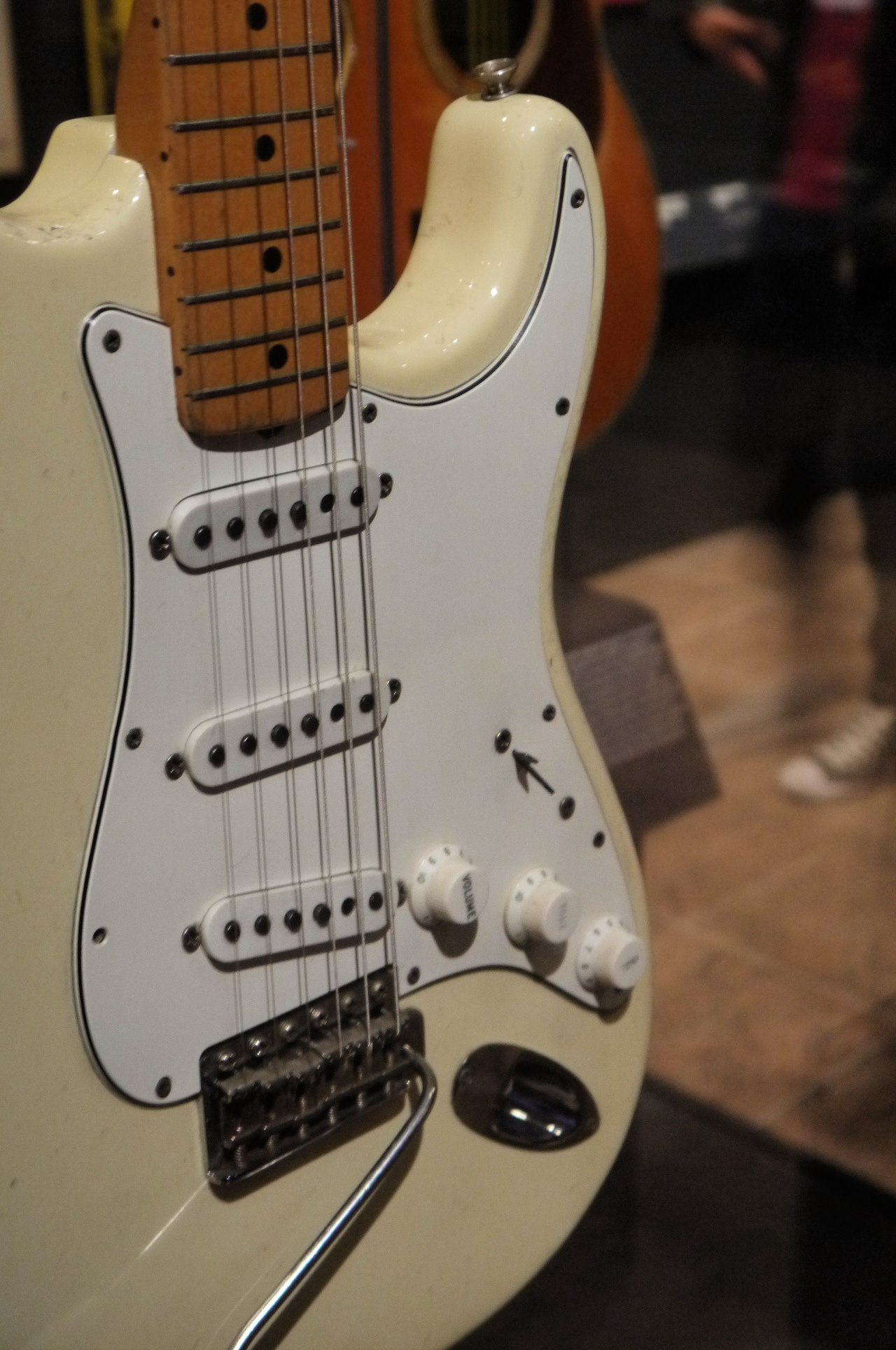
Several jurisdictions viewed the song as a gateway to drug culture. The lyrical content, while somewhat abstract, was perceived as an endorsement of hallucinogenic experiences. The "psychedelic" label became a way for censors to link the music to the rising tide of drug use among the youth. They feared the music could physically alter the perception of the listener. This fear rooted itself in the era's intense drug panic.
The guitar solo in the middle of the track is legendary. It features rapid-fire notes and expressive bends that defy standard blues patterns. It sounds like a controlled explosion of sound. This level of technical prowess and sonic chaos was unprecedented. It challenged the very definition of what a rock instrument could do.
Hendrix's use of feedback and sustain created a sense of infinite space. The song felt as enough space to expand forever. This sense of boundless possibility was exactly what the censors feared. They wanted to keep the music within the bounds of traditional, sober structures. Hendrix simply refused to play by those rules.
The Chaos of Social Irreverence
De La Soul brought a new kind of energy to hip hop in 1989. "Me Myself and I" from the album 3 Feet High and Rising was a masterpiece of sampling and wit. The track used a collage of sounds that felt playful and chaotic. It was a departure from the more aggressive styles of the time. Its use of colloquialisms and social irreverence caused trouble.
International radio markets struggled with the song's casual approach to language. The use of slang and seemingly random cultural references felt unmoored to some regulators. They viewed the track as lacking the "seriousness" required for mainstream broadcast. Some stations even implemented varying levels of censorship to tone down the perceived social disorder. They feared the song's energy was too unpredictable.
The production by Prince Paul was a marvel of the era. It utilized dense layers of samples that functioned as melodic elements. The beat was bouncy and light, yet it carried a heavy rhythmic punch. It sounded like a conversation happening in a crowded room. This complexity made it difficult for censron to pin down exactly what was "offensive."
The lyrics were clever and self-reflective. They didn't rely on the typical bravado of early rap. Instead, they offered a more nuanced, often humorous look at identity. This refusal to adhere to a standard hip-hop persona made the group an outlier. They were too funny and too weird for the rigid structures of global radio.
The Heavy Hand of the Law
Law enforcement and music have rarely been on the same side. Throughout the decades, the legal system has attempted to use censorship as a tool for social control. From the suppression of political lyrics in the 1960s to the policing of hip-hop in the 1990s, the motive remains the same. The goal is to maintain a sense of predictable, manageable culture.
The heavy hand of the law often focuses on the most visible targets. It is easier to ban a single track than to change the underlying social tensions. When authorities target a song like "Fuck tha Police," they are often reacting to the symptoms of a much larger problem. The music simply provides a visible, audible way to express the frustration. The legal battle is rarely about the notes on the page.
Censorship creates a hierarchy of what is "acceptable" for public consumption. It leaves certain voices in the shadows while elevating others. This process can stifle the evolution of genres by removing their most radical elements. However, it also creates the very resistance that defines many musical movements. The struggle against the ban becomes part of the music's identity.
Radio programmers must navigate the boundaries of legality. They must balance the desire for hits with the need to avoid fines and controversy. This creates a sterilized version of pop culture that often lacks the edge of the original movements. The true power of music often lies in the parts that the law cannot reach.
The Legacy of the Forbidden Track
Forbidden music possesses a unique kind of gravity. When a track is banned, it gains a mythic status that no amount of promotion can buy. It becomes a piece of contraband that listeners hunt for with a sense of purpose. The very act of seeking out the "illegal" version makes the listener a participant in the rebellion.
The history of these songs shows us that censorship is a failed strategy. The Sex Pistols, Madonna, and N.W.A. all proved that the harder you push against a song, the more it grows. The bans did not erase the music; they immortalized it. They ensured that these tracks would be discussed long after the initial controversy faded. They turned songs into historical landmarks.
We can look back at these moments and see the shifting boundaries of our society. Each ban represents a moment where the culture was struggling to digest a new idea. Whether it was the politics of 1977 or the sexuality of 1989, the music was always ahead of the law. It provided the soundtrack to the very changes that the censors were trying to prevent.
Music remains the most potent way to challenge the status quo. It can be loud, it can be offensive, and it can be profoundly uncomfortable. The tracks that were once deemed too dangerous to play are now the ones we study as the most vital parts of our history. The true value of a song often lies in its ability to survive the attempt to silence it.