Music on Ribs: The Secret Soviet Underground
Moscow hospitals in 1955 smelled of antiseptic and stale tobacco. A technician slid a discarded X-ray film across a cold metal tray, revealing the skeletal remains of a human ribcage. Someone had pressed a thin layer of black lacquer onto this translucent plastic. As the film spun on a makeshift turntable, the scratchy, distorted voice of Elvis Presley emerged from the shadows of the Soviet Union. This was Roentgenizdat, a desperate, brilliant hack designed to bypass the iron grip of Stalinist censorship and deliver music on ribs to a hungry population.
The Soviet underground music scene did not begin in plush studios or trendy clubs. It started in the dark corners of medical clinics and the frantic clicking of reel-all tape recorders. For decades, the state controlled every official record press, every radio broadcast, and every concert hall. If the Ministry of Culture did not approve your melody, you simply did not exist. Musicians had to find ways to exist in the gaps between the laws.
These early listeners held their forbidden discs with trembling hands. They knew the risks of possessing Western "decadent" sounds. A single misplaced record could lead to an interrogation by the KGB. Yet, the hunger for the blues, the rock and roll, and the strange electric twang of American guitars proved stronger than the fear of the state. This era of scarcity forced a level of creativity that no well-funded Western studio could ever replicate.
The Birth of Music on Ribs and X-Ray Records
Stalinist Russia had no way to manufacture vinyl for the masses. The state-owned Melodiya label only pressed what the Party deemed ideologically pure. This left a massive void for anyone craving the energy of the West. Black market operators found a solution in the most unlikely of places: medical waste. They took discarded X-ray films, cleaned them, and used a primitive method to coat them with a thin layer of lacquer.

The sound quality of a Roentgenizdat record was abysmal. Every playback felt like listening to a ghost through a thick fog. The low fidelity of the repurposed film stock caused the audio to crackle and pop constantly. You could barely distinguish a guitar solo from the hiss of the plastic. However, the sheer thrill of hearing The Beatles or Chuck Berry in a Moscow apartment made the noise irrelevant. The distortion added a layer of grit that felt appropriate for a clandestine operation.
Listeners treated these X-ray records like holy relics. They knew that the audio was fragile and prone to degradation. A single scratch could erase a favorite verse forever. These discs were not about high-fidelity perfection. They were about the raw, unadulterated presence of a forbidden frequency. The music arrived as a signal from another world, a world where rhythm and rebellion were allowed to breathe.
The authorities viewed these records as a direct threat to Socialist Realism. They demanded music that celebrated the worker and the state. An Elvis Presley track felt like an act of war. The KGB monitored the movement of these films through the black market. They searched through mail and inspected hospital waste streams. Despite this, the supply of "ribs" never dried up because the demand was an unquenchable fire.
The Magnitizdat Tape Revolution
The 1960s brought a technological shift that changed everything. The arrival of the reel-to-reel tape recorder and later the magnetic cassette allowed for a new kind of distribution. This became known as Magnitizdat. No longer did you need a specialized laboratory to press X-ray films. Now, any student with a heavy Soviet Mayak or Edisson tape deck could become a pirate broadcaster. This was the true democratization of the underground.
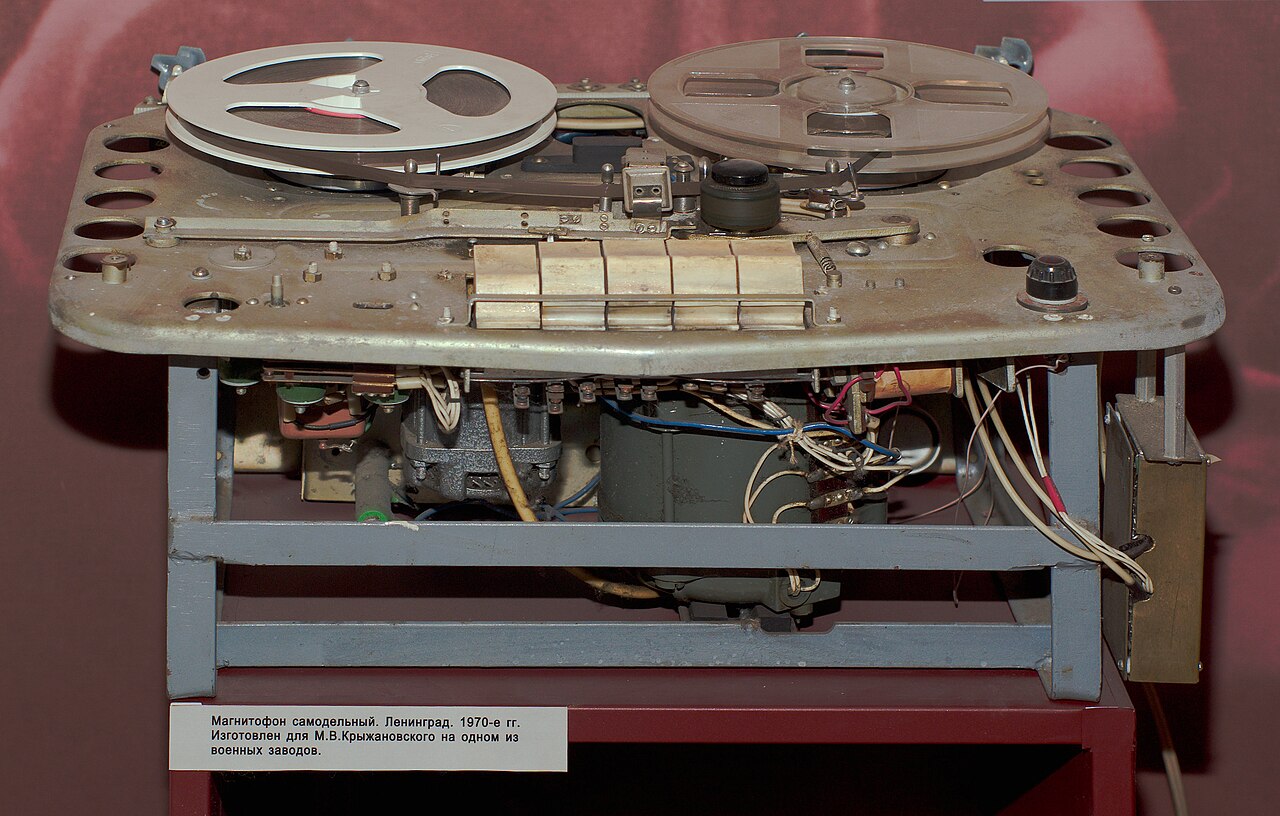
Magnitizdat turned the entire Soviet Union into a massive, decentralized network of tape traders. A musician would record a set in a cramped kitchen. A friend would then copy that tape onto five others.
Those five would become fifty. This rapid, uncontrolled multiplication made the music impossible to kill. The KGB could seize a single studio, but they could not seize every apartment in Leningrad or Moscow. The music moved like a virus through the social fabric of the youth.
The sound of Magnitizdat was distinct and gritty. It carried the ambient noise of the room where it was recorded. You could hear the hum of a refrigerator or the muffled sound of a passing tram. These imperfections gave the recordings an intimacy that polished studio albums lack. When you listened to a Magnitizdat tape, you were eavesdropping on a secret. The hiss of the magnetic tape became the texture of the revolution.
Alexander Gradsky played a vital role in this technical evolution. As a classically trained musician, he understood the importance of production. He brought a level of sonic discipline to these underground recordings that helped them survive the transition from amateur hobby to a legitimate movement. Gradsky helped bridge the much-needed gap between the raw chaos of the early tapes and the more structured rock sounds that would emerge in the following decade. He understood that for the music to be taken seriously, it needed to sound like more than just a noisy accident.
Boris Grebenshchikov and the Art of Metaphor
Boris Grebenshchikov understood the rules of the game better than anyone. As the leader of the band Aquarium, he mastered the art of the linguistic detour. He knew that if he sang about the Kremlin, the censors would shut him down instantly. Instead, he sang about landscapes, dreams, and ancient myths. He buried his political dissent inside dense, psychedelic, and folk arrangements. This way, the message remained intact for those who knew how to decode it.

The lyrics of Aquarium functioned like a cipher. To a state official, a song might sound like a harmless psychedelic trip. To a teenager in Leningrad, that same song was a sharp critique of the stagnant Soviet reality. Grebenslonchikov used heavy metaphor to create a space where the truth could hide in plain sight. He turned the song into a labyrinth that the KGB could not navigate without getting lost.
The music itself reflected this duality. You might hear an acoustic guitar played with folk simplicity, suddenly interrupted by a distorted electric riff that felt like a jagged edge. The arrangements were often unpredictable. One moment, the band sounded like they were playing in a quiet garden; the next, they sounded like they were tearing through a concrete wall. This tension mirrored the tension of living in a society where everything was monitored.
Grebenshchikov's brilliance lay in his ability to maintain artistic integrity while operating under extreme pressure. He did not compromise the soul of the music to please the authorities. He simply changed the way the soul presented itself. This allowed the underground to grow into a sophisticated movement with its own complex language and iconography. He proved that you do not need a massive marketing budget to reach the hearts of a nation; you only need a clever way to speak.
"I want changes! I want changes!" (Khochu Peremen!)
The line above, though famously associated with Viktor Tsoi, captures the energy that Grebenshchikov helped cultivate. It was a sentiment that permeated every layer of the underground. The music was not just entertainment; it was a demand for a different kind of existence. The lyrics provided the vocabulary for a generation that was tired of being told what to think and how to feel.
The Leningrad Rock Club Under Watch
Leningrad, 1981. The authorities decided that if they could not stop the underground, they would at least regulate it. They established the Leningrad Rock Club within a local house of culture. This gave the state a way to monitor the musicians. Every rehearsal, every performance, and every new member had to pass through a process of official sanctioning. It was a controlled environment designed to keep the anti-Soviet elements contained.
The club became a strange, claustrophlagobic hub of creativity. Bands like Aquarium and Kino performed under the watchful eyes of state representatives. These officials sat in the back of the room, taking notes on everything from the lyrics to the length of the guitar solos. The atmosphere was thick with suspicion. Musicians had to be careful, yet the club provided a much-needed physical space for the community to coalesce. It was a sanctuary built inside a prison.
The KGB and the Ministry of Culture frequently raided these sessions. They would seize tapes, break instruments, and arrest anyone deemed too radical. There is a specific kind of fear that comes from playing music while knowing a raid could happen at any moment. It forced the musicians to sharpen their focus. Every note had to count because the music might be the last thing they ever played in public.
Despite the surveillance, the club fostered a unique subculture. It was a place where the boundaries between performers and audience blurred. The fans were just as much a part of the movement as the musicians. They shared the same banned tapes, the same secret metaphors, and the same hope for a future that the state could not predict. The club was the beating heart of the Leningrad underground, a place where the very air felt charged with the possibility of revolt.
The crackdown intensified during the 1980 Moscow Olympics. The Soviet authorities wanted to present a polished, perfect image of socialism to the world. They clamped down hard on any Westernized musical styles that did not conform to the rigid standards of Socialist Realism. They wanted clean, patriotic anthems, not the distorted, brooding sounds of the Leningrad underground. This pressure only served to make the underground's defiance more potent. The more the state pushed, the harder the music pushed back.
The Rise of Kino and the Sound of Change
Viktor Tsoi arrived like a bolt of lightning. As the frontman of Kino, he brought a new, stark aesthetic to the Soviet underground music scene. His voice was deep, commanding, and devoid of unnecessary flourish. The music of Kino was not about psychedelic wandering; it was about the immediate, the grim, and the real. It captured the post-industrial atmosphere of the late Soviet era with brutal precision.
The 1988 album Gruppa Krovi (Blood Type) remains a masterpiece of this era. The production, though still operating within the constraints of the underground, featured a minimalist, post-punk arrangement that felt incredibly modern. The bass lines hit like a fist to the chest, driving the songs forward with an unrelenting, mechanical rhythm. The guitars were sharp and cold, mirroring the concrete streets of Leningrad. It was the sound of a society on the brink of collapse.
Tsoi's songwriting in the mid-1980s coincided with the rise of Glasnost. The political atmosphere was shifting, and his lyrics reflected this growing demand for transparency. In tracks like "Khochu Peremen!", the plea for change was no t a metaphor; it was a direct, unavoidable statement. He became the voice of a generation that was ready to move past the era of shadows and X-ray records. He turned the underground's private rebellion into a public anthem.
The influence of Kino extended far beyond the borders of the Soviet Union. The band's ability to blend Western post-punk influences with a uniquely Soviet sense of melancholy created something entirely new. They did not just copy the West; they translated the feeling of Western rock into a language that spoke to the Soviet experience. When Tsoi sang about the darkness, every person living in the shadow of the Iron Curtain felt the weight of those words.
The music of Kino functioned as a sonic document of a dying empire. It captured the exhaustion, the frustration, and the sudden, terrifying burst of hope that characterized the late 1980s. The songs did not offer easy answers. Instead, they provided a soundtrack for the uncertainty of a world that was fundamentally changing. Tsoi's presence on the stage was a physical manifestation of that change, a force that could not be contained by any state-sanctioned club.
The Death of the Underground Dream
The collapse of the Soviet Union in 1991 brought an end to the era of secrecy. Suddenly, the censorship vanished, and the black markets disappeared. The underground music scene was thrust into the harsh light of a capitalist reality. The struggle was noont longer against the KGB, but against the brutal economics of the new Russian music industry. The very thing that had defined the movement - its clandestine, much-needed isolation - was gone.
Many of the legendary figures of the underground struggled to adapt. The transition from playing for the sake of rebellion to playing for profit was jarring. The sense of shared struggle that had bound the musicians and the fans together began to dissolve. The music became a commodity. The magic of the Magnitizdat tape, which relied on the shared secret, could not survive in an era of mass-produced CDs and globalized pop culture.
The technical advancements that had once been revolutionary now felt commonplace. The raw, distorted sound of the X-ray records and the gritty hiss of the tapes were replaced by polished, high-fidelity studio productions. The grit was gone. While the music became more accessible, it also lost some of its essential, dangerous edge. The underground had become the mainstream, and in that transition, much of its soul was lost to the machinery of commerce.
The legacy of the Soviet underground music scene remains visible in the DNA of modern Russian rock. The spirit of defiance, the mastery of metaphor, and the ability to find beauty in the most broken of places continue to influence new generations. We can still hear the echoes of Tsoi's bass lines and the ghost of the X-ray crackle in the experimental sounds of today. The era of the "music on ribs" is over, but the hunger for a truth that cannot be censored remains.
History does not care for the survival of subcultures. It only records their impact. The Soviet underground was a period of intense, concentrated creativity born from the necessity of survival. It was a time when a piece of discarded medical film could hold the weight of a nation's dreams. The shadows of Leningrad and Moscow still hold the echoes of those forbidden melodies, reminding us that even in the darkest era, the music finds a way to play.