The Haunted Mixing Desk: London's Unsettling Studios
London does not sleep; it merely vibrates with a low, industrial hum that settles into the marrow of the city. In the 1970s, this vibration intensified within the concrete and wood of the city's premier recording facilities. Musicians and engineers lived in a state of perpetual, caffeine-fueled exhaustion. They worked late-night shifts in rooms where the air felt heavy, thick with the scent of ozone, cigarette smoke, and something much harder to define. This was the era of the London studio circuit, a high-pressure network of Olympic, Trident, and Abbey Road that functioned as the beating heart of global rock. But beneath the prestige of the gear, a different kind of energy resided in the shadows of the control rooms.
The Ghost in the Studer Machine
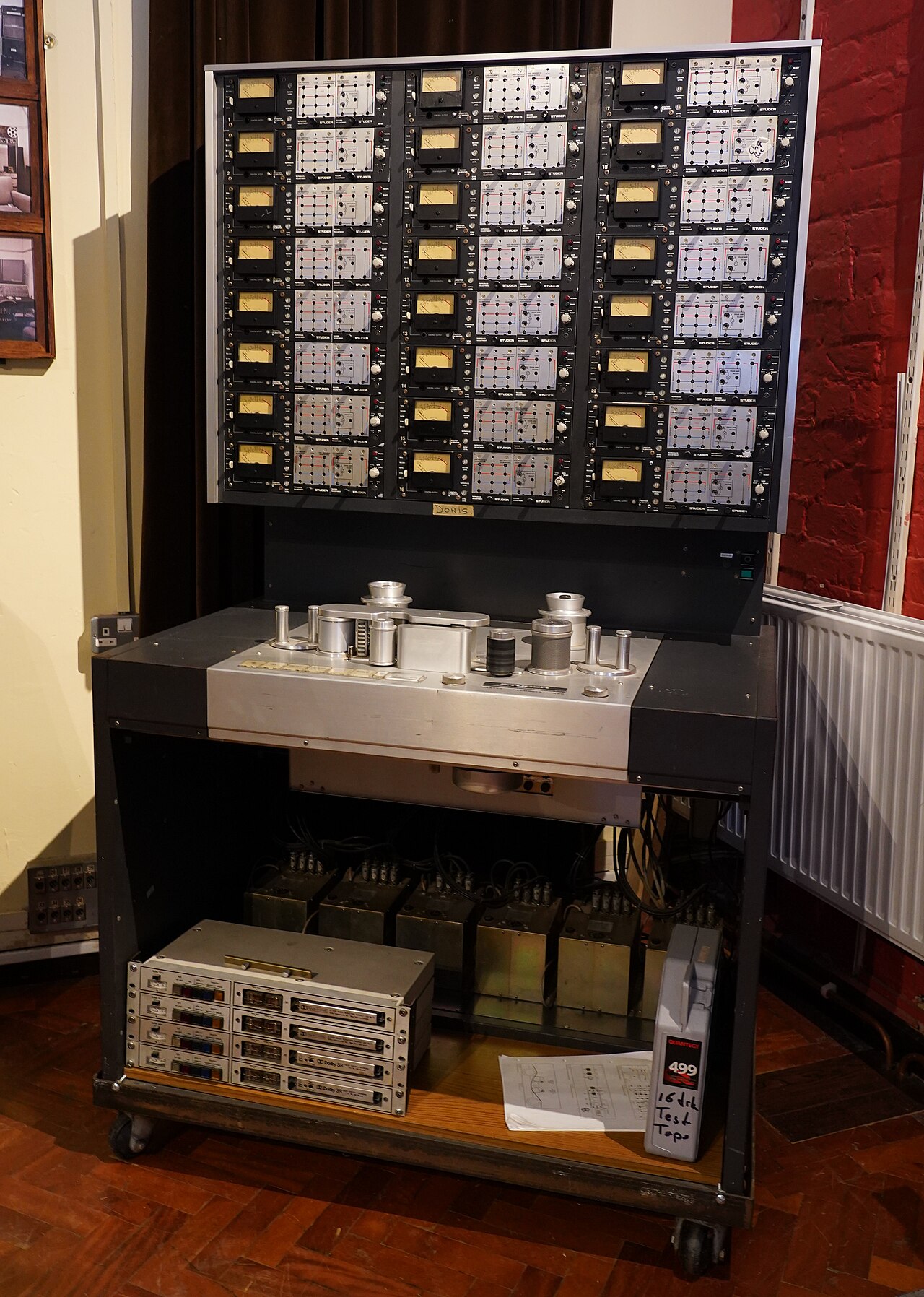
Analog recording required a physical struggle. Engineers did not merely press play. They wrestled with massive, spinning beasts of steel and magnetism. The Studer and Ampex tape machines served as the masters of these domains. These machines demanded respect. They operated with a mechanical ferocity that could produce errors no technician could fully explain. A sudden drop in signal strength or a momentary flutter in the tape speed could ruin a perfect vocal take. Engineers called these glitches "phantom" signal drops. They felt like interruptions from an outside force.
The tension of the era resided in the physical medium itself. Magnetic tape holds memory. It captures the vibrations of the room, the heat of the lamps, and the sweat of the performers. In the 1970s, the reliance on heavy-duty analog machines created a specific type of technical anxiety. A technician might monitor a pristine track through a Neumann U47 microphone, only to hear a sudden, inexplicable hiss or a rhythmic thud that did not exist in the live room. These were not just artifacts of degradation. They were the first whispers of the studio's true inhabitants.
Technical instability birthed the era of "ghost" tracks. Tape bleed and signal degradation created a playground for urban legends. When a signal from a distant drum kit bled into a vocal mic, or when a layer of tape hiss mimicked the cadence of a human whisper, the studio staff did not call it "poor isolation." They called it a haunting. The mechanical limitations of the era forced engineers to treat every recording as a battle against the machine. They fought the tape, they fought the microphones, and they fought the unseen intruders that seemed to hide within the magnetic oxide.
Abbey Road and the Cold Spots
Abbey Road Studio 2 stands as a cathedral of modern music. It is the site where The Beatles recorded their 1969 masterpiece, Abbey Road. People often focus on the musical achievement of that album, but they ignore the atmosphere of the room. The studio possesses a physical weight. It is a massive, cavernous space that demands a certain level of sonic authority. However, the prestige of the room comes with a price. Engineers have long documented the "presence" phenomenon within these larger live rooms.
The temperature in Studio 2 does not remain constant. Engineers frequently report sudden, localized temperature shifts. You might stand near a Neumann U67, feeling the warmth of the vacuum tubes, only to have a sudden, biting cold spot settle over your shoulders. These are not drafts from an uncalibrated air conditioning unit. These are localized pockets of freezing air that move through the room with purpose. It is a physical sensation that defies the logic of building ventilation.
Geoff Emerick understood this tension better than anyone. As the engineer for The Beatles, he operated at the epicenter of the studio's most intense moments. In his memoir, Here, There and Everywhere, Emerick describes an environment that was often eerie and intensely pressured. He does not write about ghosts in a sensationalist manner. He writes about the weight of the atmosphere. He describes the intensity of the sessions where the air itself seemed to thicken with the expectations of the musicians and the ghosts of the sessions that came before. The studio was not just a workspace; it was a sentient participant in the recording process.
The equipment played a role in this haunting. The heavy-duty Neumann microphones, the very tools used to capture the most iconic voices in history, acted as conduits. A U47 does not just pick up frequency ranges. It picks up the room. If the room contains a lingering, cold energy, that energy finds its way into the signal chain. When you listen to the lush, layered textures of the late Beatles era, you are listening to a room that was actively breathing alongside the band.
Trident Studios: Soho's Claustrophobic Pressure
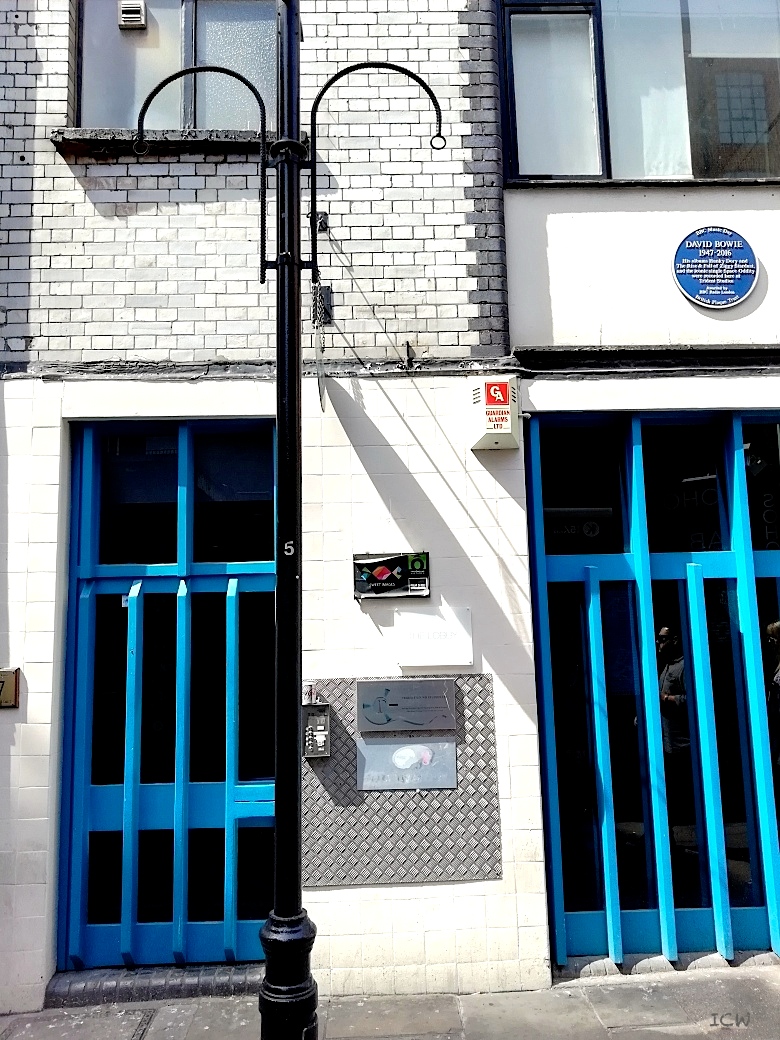
If Abbey Road is a cathedral, Trident Studios was a pressure cooker. Located in the heart of Soho, Trident lacked the sprawling, airy halls of its more famous neighbors. Instead, it offered a dense, claustrophobic energy. The Soho atmosphere is a specific brand of London intensity. It is the sound of crowded streets, neon lights, and the frantic, grinding pace of a mid-century metropolis. Trident absorbed this energy and compressed it into its small, high-intensity rooms.
Technical limitations at Trident created a specific kind of psychological warfare. The studio operated under a strict 8-track limitation. This was a massive bottleneck. An artist could not simply layer infinite tracks of guitars and backing vocals. Every decision carried immense weight. Every mistake wasted a precious track. This forced musicians into grueling, multi-day sessions where the margin for error vanished. You had to get it right, or you had to commit to a permanent, irreversible compromise.
This high-stakes environment produced some of the greatest music in history. Queen recorded their 1975 masterpiece, A Night at the Opera, within these tight, stressful confines. The sheer density of the production on tracks like "Bohemian Rhapsody" defies the 8-track constraint. It required a level of precision and stamina that pushed both the musicians and the engineers to the brink of exhaustion. The pressure of the Soho setting, combined with the technical limitations of the gear, created a sense of desperation. It was a sonic struggle that felt almost violent.
The claustrophobia of Trident contributed to its reputation for unsettling sessions. There was no room to breathe. The walls seemed to press inward. The engineers worked in a state of hyper-vigilance, watching the meters and the tape heads, waiting for the moment the pressure became too much. In the tight corridors of Trident, the line between creative tension and genuine dread became dangerously thin.
The Technical Glitch as Urban Legend
We often mistake technical failure for supernatural interference. In the era of analog tape, this mistake was easy to make. The medium was inherently unstable. Tape stretches. Dust accumulates. Magnetic particles flake off the plastic substrate. These physical realities created the "ghost" tracks that haunted the London circuit. A sudden pop in the audio might be a speck of dust on the playback head, but to a sleep-disrupted engineer at 3:00 AM, it sounds like a footstep in the hallway.
The industry relied on massive, temperamental machines. When an Ampex machine suffered a mechanical hiccup, it did not just produce a skip. It produced a sonic anomaly that felt out of place in the musical context. These glitches became the foundation of studio lore. If a vocal track contained a sudden, rhythmic distortion, the engineers would whisper about "the presence" in the room. They would look for patterns in the noise. They would find meaning in the malfunctions.
The technicality of the era fueled the mythos. Because the technology was not digital, there was no way to "undo" an error. You could not simply delete a glitch. You had to live with it, or you had to re-record. This permanence gave every technical error a sense of permanence in the historical record. The mistakes became part of the art. The "ghosts" became part of the discography. The uncertainty of the analog signal allowed for a layer of mystery that modern, sterile, digital recording has effectively murdered.
Why Engineers Won't Return to the Booth
Modern recording is too clean. We live in an age of total recall and digital perfection. We can scrub every hiss, every pop, and every unwanted resonance from a track with a single click. We have eliminated the "presence" of the room. We have silenced the Studer machines. We have removed the anxiety of the 8-track limit. In doing so, we have also removed the soul of the session. The modern engineer does not encounter the unknown. They encounter a mathematical certainty.
There is a profound loss in this transition. The old London studios, with all their cold spots and mechanical failures, possessed a character that cannot be synthesized. The tension of the 1970s studio circuit was a vital component of the music. The fear of a "phantom" signal drop forced a level of focus that is impossible in a modern DAW. The uncertainty of the medium demanded a reactive, intuitive form of engineering. You had to be a part of the machine, not just an operator of software.
The engineers of the past, men like Geoff Emerick, worked in a world where the environment was an adversary. They navigated the claustrophobia of Trident and the eerie expanses of Abbey Road. They listened for the ghosts. While the modern professional enjoys a much more stable and predictable workspace, they miss the visceral, unpredictable energy of the haunted desk. The ghosts are gone, but so is the magic of the struggle.