The Housewife Who Heard Bach in Her Head
London, 1972, felt like a city caught between two breaths. Rain slicked the pavement of North London streets while the low hum of a Steinway upright echoed from a small, unremarkable terraced house. Florence Cassell sat alone in a quiet room, her fingers resting on ivory keys that felt colder than usual. She did not hear the traffic outside or the distant sirens of a changing decade. Instead, she heard the unmistakable, mathematical precision of Johann Sebastian Bach whispering through the silence of her own mind.
This was no standard case of musical inspiration or a sudden interest in classical theory. Cassell, a middle-aged housewife with no formal training in composition, claimed a direct line to the dead. She insisted that deceased masters like Bach and Beethoven transmitted melodic intervals and rhythmic structures directly to her via telepathy. This phenomenon, which the press later dubbed Florence Cassell automatic composition, turned a quiet domestic life into a bizarre international sensation. People stopped seeing a London mother and started seeing a human radio tuned to a frequency of ghosts.
The sounds she described lacked any vague or impressionistic quality. She spoke of specific, sharp intervals that landed with the weight of a hammer on an anvil. There was no room for ambiguity in her descriptions of the voices. The music arrived as a structural command, a set of instructions that demanded physical execution on the piano. To the neighbors, she was just another woman tending to her garden. To the music world, she was a walking anomaly that threatened the very definition of human creativity.
Witnesses from that early period described a woman possessed by a strange, rhythmic focus. She would sit for hours, her movements dictated by a tempo that no one else could hear. The air in that room felt heavy, charged with the tension of a broadcast waiting to happen. It was the beginning of a media storm that would eventually pit the scientific community against the supernatural.
A Quiet Room in London, 1972
Florence Cassell lived a life defined by the routines of a typical London suburb. Her days followed the predictable rhythm of domesticity, yet her mind inhabited a different era entirely. The first instances of these musical transmissions occurred in the early 1970s, specifically around 1972. She began to notice that certain melodic fragments appeared in her consciousness with startling clarity. These were not mere memories of songs she had heard on the radio. They were new, structured, and complex.

The process required absolute stillness to function. Cassell insisted that she could only receive these transmissions in a quiet room, away from the distractions of the modern world. She would sit at a piano, a sturdy instrument that anchored her to the physical plane while her mind drifted toward the Baroque. The voices provided more than just melodies. They dictated specific rhythmic structures that felt like the ticking of a clock made of bone. She felt the weight of every note before she ever pressed a key.
No one expects a housewife to become a vessel for the dead. The sheer randomness of her selection made the claim harder to dismiss as a mere hobby. If she had claimed to be a medium for spiritualist séances, people might have rolled their eyes. By claiming to be a medium for Bach, she brought the scrutiny of musicology into her living room. The precision of the intervals she produced suggested a depth of knowledge that defied her lack of formal education.
Visitors often described the physical sensation of the music. She spoke of the notes as if they were physical objects being placed in her hands. One could almost feel the vibration of the low strings in the room during her sessions. It was a visceral, heavy experience that felt more like a construction project than a musical performance. The music did not flow; it arrived, piece by piece, like bricks being laid in a wall.
The Daily Mail and the Media Frenzy
London newspapers caught wind of the Cassell phenomenon in 1974. The Daily Mail led the charge, sending reporters to investigate the woman who claimed to be a musical conduit. They did not approach her with scientific rigor but with the hunger of a tabloid looking for a sensation. The headlines painted a hungry picture of a domestic lady transformed by a ghostly orchestra. This coverage turned a private, strange occurrence into a public spectacle that gripped the United Kingdom.
Journalists crowded the edges of her life, peering into the windows of her London home. They interviewed neighbors who recalled seeing her sitting motionless at the piano for hours. The press thrived on the tension between her ordinary appearance and her extraordinary claims. They loved the idea of a middle-aged woman finding something so profound in the mundane. It was the perfect tabloid narrative: the ordinary person touched by the divine.
The frenzy reached a peak when the press began to analyze the "automatic" nature of her work. They questioned how a person without a background in counterpoint could produce such structured fragments. The Daily Mail investigations focused heavily on the concept of "automatic composition" as a phenomenon that bypassed the conscious mind. This framing turned Cassell into a celebrity, a figure of both fascination and intense skepticism. The public watched her every move, waiting for the facade to crack.
Critics in the broader London press were less kind. Some broadsheets used the coverage to mock the growing obsession with the paranormal. They poked fun at the idea of a housewife acting as a fundamental mouthpiece for Beethoven. Yet, the coverage was impossible to ignore because the physical evidence - the papers she produced - existed. You could hold the scribbles in your hand and see the frantic energy of her work. The media frenzy was not just about her claims, but about the strange artifacts she left behind.
The BBC Experiment and the Quest for Truth
BBC radio producers saw an opportunity to move beyond tabloid sensationalism in 1975. They wanted to strip away the mystery and apply a layer of experimental testing. The station organized a controlled study to see if the public could distinguish Cassell's "transmissions" from actual historical works. They played snippets of her compositions alongside authentic pieces from the Baroque and Classical eras. It was a high-stakes attempt to validate or debunk a legend using the power of the ear.
The experiment focused on the auditory perception of listeners. Listeners heard a sequence of notes and had to decide if they were hearing the work of a dead master or a modern housewife. The tension during the broadcast was palpable across the airwaves. It felt like a courtroom drama where the only evidence was sound. The producers used high-quality studio equipment to ensure the clarity of the musical fragments.
"The notes arrived not as ideas, but as instructions, as if the piano itself was being played by a hand that wasn't mine."
The results of the BBC investigation were inconclusive and deeply frustrating for both sides. Some listeners identified her fragments as authentic Baroque pieces, noting the correct use of ornamentation and sequence. Others dismissed them as mere imitations. The experiment failed to provide a definitive verdict, which only served to fuel the surrounding debate. The ambiguity kept the story alive in the national consciousness for months.
This period of investigation coincided with a massive shift in the UK's musical identity. While the BBC was testing a housewife's "ghost music," the airwaves were also being flooded with the heavy, swirling textures of experimental ambient music. The idea of music being something that exists outside of traditional human performance was already gaining traction. Cassell’s claims fit perfectly into a culture that was becoming comfortable with the strange, the atmospheric, and the unseen.
Scribbles on Paper and the Royal College
The physical remains of Cassell's work were perhaps the most baffling element of her story. She did not produce clean, legible scores that any student could read. Instead, her compositions consisted of handwritten, often illegible scribbled scraps of medium-weight paper. These were not musical notations in the traditional sense. They looked more like the frantic markings of someone trying to catch a falling object before it hit the ground.
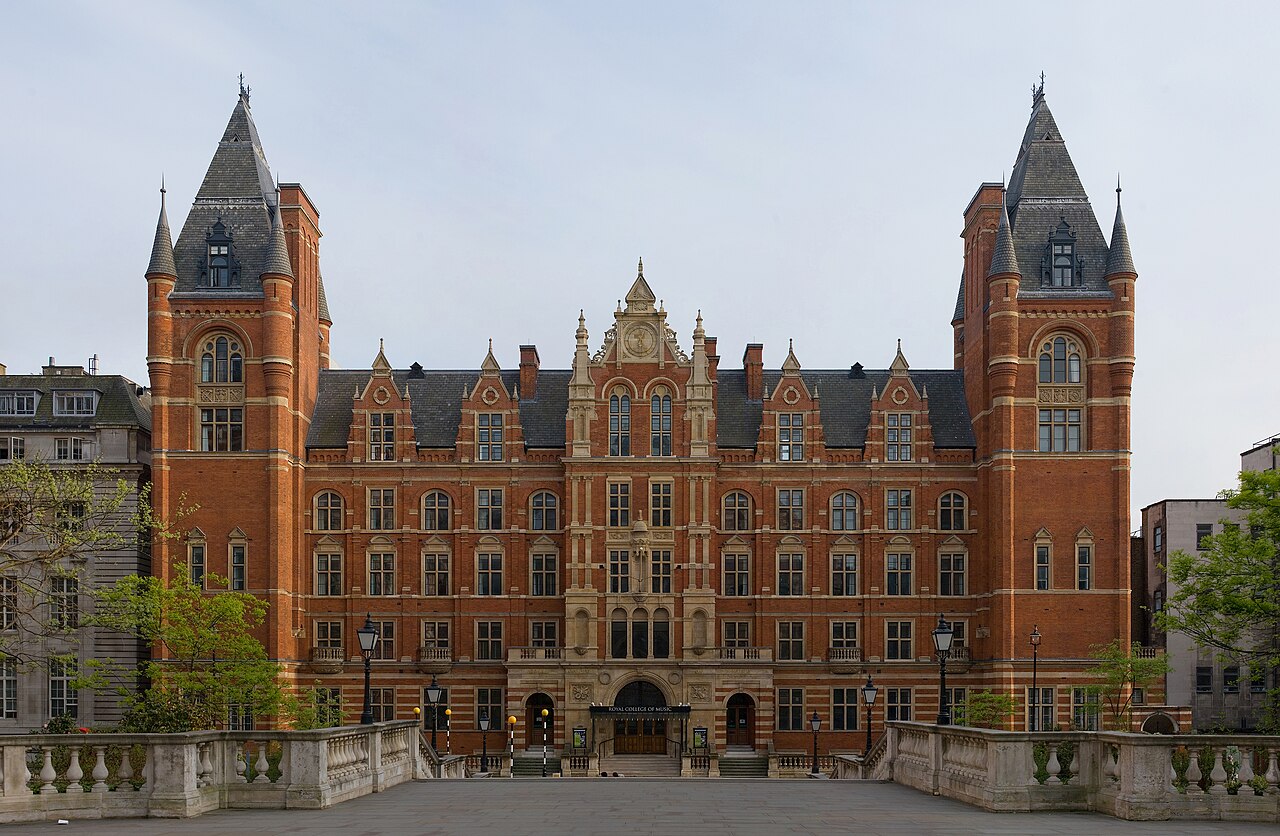
Musicologists at the Royal College of London took up the task of analyzing these fragments. They approached the papers with the same scrutiny one might use for a recovered ancient manuscript. They attempted to transcribe the messy loops and jagged lines into standard staff notation. The process was grueling and often yielded nothing but confusion. The symbols lacked the standard headers and rests that define professional scores.
Despite the mess, the academics found something startling within the chaos. Several fragments showed structural similarities to motifs from the late Baroque period. The way she utilized specific melodic intervals mirrored the logic of 18th-century counterpoint. It was a scientific anomaly that refused to be dismissed as mere madness. The Royal College findings suggested that even if the source was questionable, the mathematical logic of the music remained classical.
The tension between the scribbles and the structure created a massive divide in the academic community. Some researchers argued that the patterns were simply the result of a highly suggestible mind mimicking what it had heard in the past. Others believed the complexity of the rhythmic structures was too advanced for simple mimicry. They looked at the jagged lines and saw the ghost of a master at work. The papers remained a puzzle that no amount of modern analysis could fully solve.
A Transition from Prog to Punk
London in the mid-1970s was a city in the middle of a violent musical metamorphosis. The era of heavy, sprawling prog-rad, epitomized by the epic structures of Pink Floyd, was beginning to lose its grip on the cultural center. At the same time, the raw, stripped-back aggression of the burgeoning punk movement was preparing to explode. Cassell's phenomenon sat in a strange, liminal space between these two extremes. Her music was old, structured, and complex, yet her method of delivery was chaotic and unmediated.
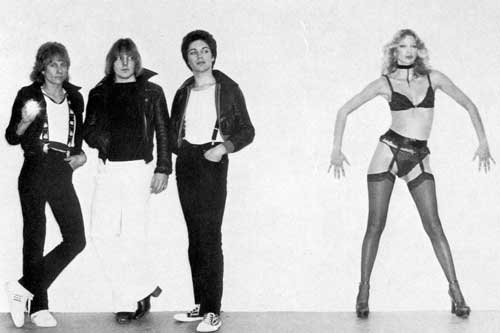
The heavy textures of prog-rock demanded a certain level of virtuosity and technical mastery. Cassell's work lacked this human performance element, relying instead on a perceived divine dictation. This lack of "performer" echoed the experimentalism of the era's avant-garde scene. Musicians were experimenting with tape loops and ambient textures that bypassed the traditional rock band setup. The idea of music as a direct, unadorned transmission was already part of the underground's DNA.
Then came 1976, and the arrival of punk changed the rules of engagement entirely. Punk rejected the complexity of the Baroque and the pretension of prog-rock in favor of three chords and raw energy. The media frenzy surrounding Cassell felt like a relic of an older, more mystical way of looking at art. While the Sex Pistols were tearing down the structures of the music industry, Cassell was claiming to be the vessel for the very foundations of those structures. It was a clash of eras happening simultaneously in the British press.
The cultural shift made Cassell's story feel both ancient and modern. To the punk crowd, she was a bizarre curiosity, a piece of the old world's madness. To the prog enthusiasts, she was a strange, new form of composition that bypassed the need for a drummer or a bassist. She existed in a vacuum of her own making, a space where the mathematical past met the chaotic future. The sheer timing of her peak visibility made her an accidental icon of a fractured decade.
The Silence of the Unreleased Works
No recorded album of Cassell's works ever reached the shelves of a major label. There is no EMI release or De la Vega pressing that captures the "transmissions" in their full glory. During her peak period of media attention, the industry's gatekeepers remained uninterested in her messy, unplayable scribbles. They could not market a phenomenon that lacked a repeatable, high-fidelity performance. The music existed only in the moment of its arrival and the struggle to transcribe it.
The absence of a commercial discography adds to the legend's haunting quality. We are left only with the stories of what people heard in that London room. We have the fragmented analyses from the Royal College and the breathless reports from the Daily Mail. Without a recording, the music remains a ghost, much like the composers who supposedly provided it. The silence of the unreleased works prevents us from ever truly judging the quality of the music itself.
The debate over her sanity continued long after the media moved on to the next scandal. Some London broadsheets argued she was a victim of schizophrenia, a woman lost in a drug-induced or mental break. Others clung to the idea of a genuine musical medium, a person caught in a spiritualist trance. The lack of a permanent, audible record allowed both sides to maintain their positions. There was no definitive playback to settle the score.
Florence Cassell eventually faded from the headlines, retreating back into the quietude of her London life. The piano went silent, and the voices, if they ever truly existed, stopped their broadcast. All that remains is a strange chapter in the history of 1970s London, a moment when a housewife briefly held the keys to a dead era. The music stays trapped in those illegible ink marks, forever waiting for a translator who can never come.