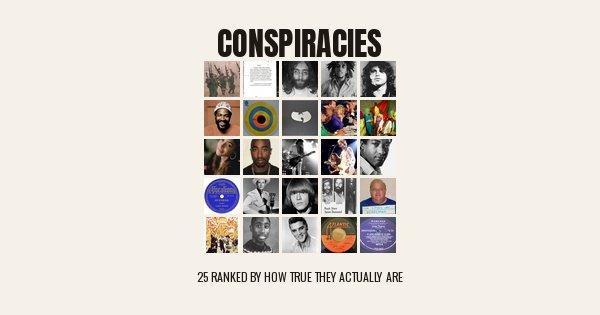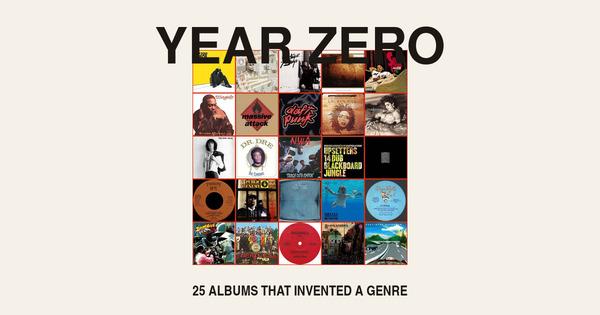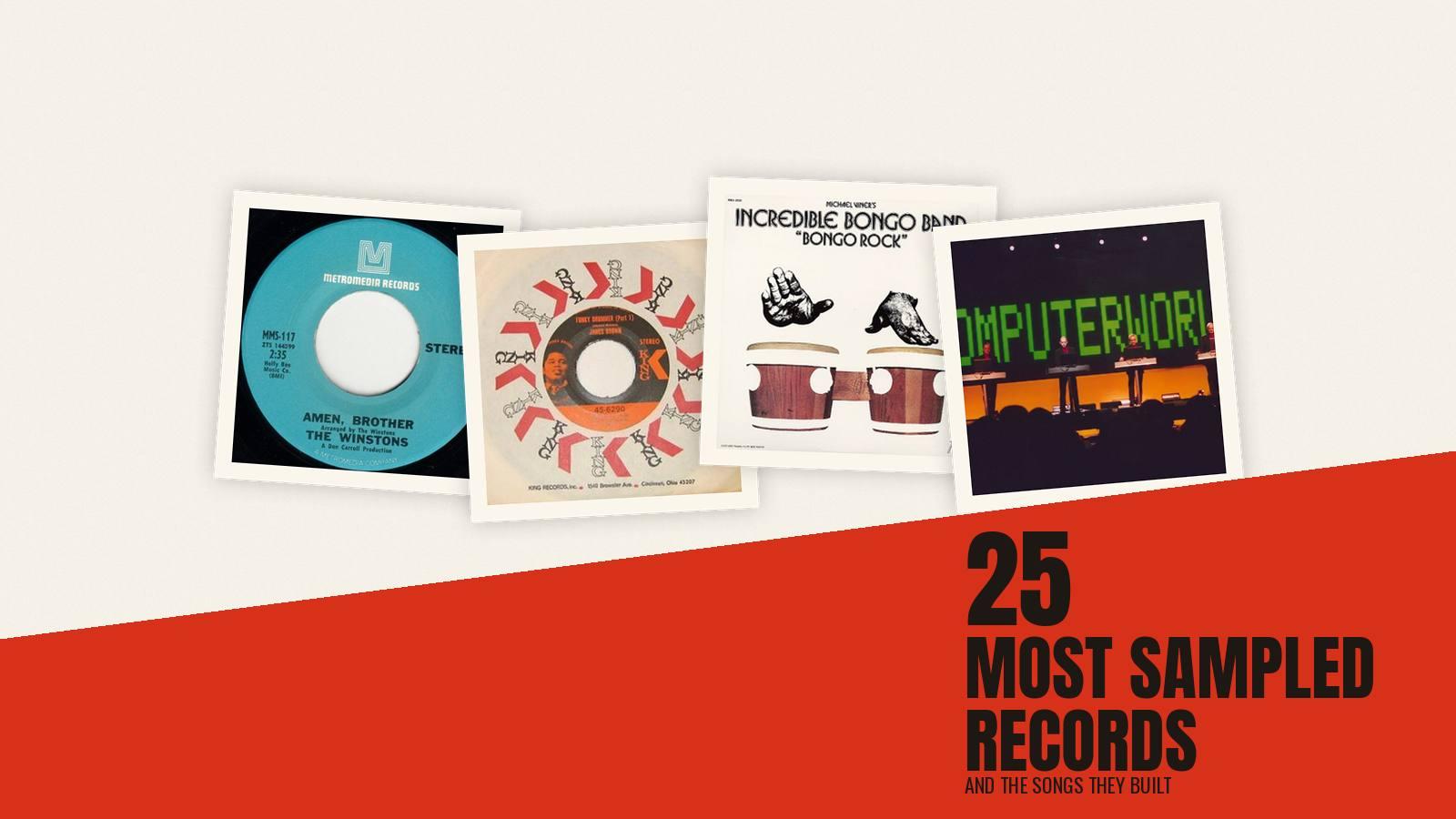
Twenty-five records that other musicians spent the last fifty years rebuilding into new songs, ranked by what they actually built. Sample counts cited from WhoSampled and primary-source label histories. Royalties and credit stories included where they matter, which is most of the time.
Every modern song you love is partly somebody else's session work. A drummer who got paid scale in 1969. A bass player who played for eight bars and went home. A horn section that was hired for an afternoon and never knew the tape would outlive them. Sampling rewrote popular music three times over, and the people who supplied the raw material almost always got the worst deal.
This list is one attempt to put their names back on the songs. We started from WhoSampled counts, cross-checked against the Wikipedia sampling sections, the Bridgeport v. UMG court records, the Tuff City Records licensing logs, and the artist interviews that survived. Then we ranked them by what they built, not by what they made.
Three verdict tiers run through the countdown. FOUNDATIONAL records spawned a genre or invented a way of making music. GENRE-DEFINING records built a specific scene, sound, or era. STILL EVERYWHERE records refuse to age, getting flipped by a new generation of producers every decade. The countdown runs 25 to 1.
The Chi-Lites Built Beyonce's Crazy in Love
A two-bar horn motif from a Chicago album cut became the opening statement of twenty-first century pop.
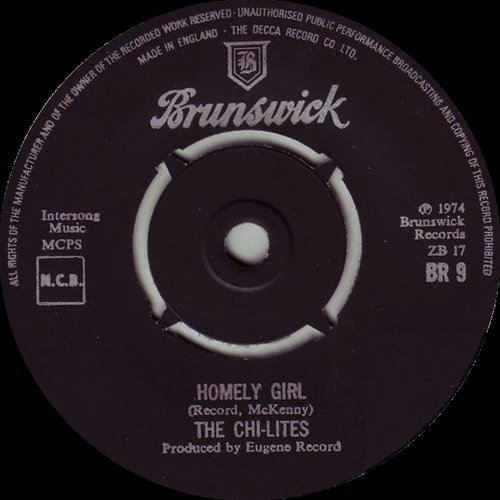
Eugene Record wrote "Are You My Woman? (Tell Me So)" for the Chi-Lites in 1970, a Brunswick Records album track that sat quietly in the South Side soul group's catalogue while "Have You Seen Her" and "Oh Girl" did the chart work. The track contains a four-bar descending brass figure, trumpet and trombone in unison, that opens the recording and recurs through the chorus. Outside of Chicago, almost nobody knew it existed.
Then in 2003, producer Rich Harrison looped that brass motif at 100 BPM, dropped a hip-hop kick and snare under it, and handed it to Beyonce. "Crazy in Love" became the best-selling and most-streamed song of 2003, the opening statement of her solo career, and one of the most recognised hooks in 21st century pop. Rolling Stone ranked it number 16 on the 2024 revision of the 500 Greatest Songs of All Time.
Eugene Record received a co-writing credit and his estate continues to collect. He died in 2005. The 2015 Fifty Shades of Grey re-recording required a fresh clearance from his estate, and producers in the 2020s still build YouTube beats and DJ edits around the looped horn riff because the Crazy in Love connection guarantees recognition.
The reversal here is the story. Before 2003, almost no casual listener knew "Are You My Woman?" After 2003, its brass riff became a sound that listeners recognise without ever having heard the source. Reverse archaeology, fully completed.
---
Lineage: Eugene Record wrote a horn chart in Chicago in 1970 and three decades later it became the opening fanfare of the biggest pop career of the century.
The Disco Hook That Drag Made Immortal
An ascending Fender bass run from a 1978 disco breakout became the soundtrack of every ball, every drag stage, every queer film placement that came after.
David Shields's Fender bass climbs from G to the fourth in the opening seconds of Cheryl Lynn's "Got to Be Real," recorded April 1978 at Sunset Sound Studios in Hollywood. James Gadson is on drums. Ray Parker Jr. plays guitar. The track was written by Lynn, David Paich, and David Foster, two Toto core members who would shape mainstream pop production for the next decade. It hit number 1 on the Hot Soul Singles chart, number 12 pop.
The afterlife is the story. Father MC sampled the opening run for "I'll Do 4 U" in 1990, and that same year Jennie Livingston's documentary Paris Is Burning placed the track at the heart of New York's ball scene. The placement lodged "Got to Be Real" permanently inside queer culture consciousness. RuPaul's Drag Race has featured the track on All Stars seasons every year since 2012. Night at the Museum: Secret of the Tomb used it for a major studio film placement in 2014. Billboard ranked it number 29 in the 100 Greatest LGBTQ+ Anthems of All Time in 2025.
David Paich and David Foster are among the most commercially active songwriters of their era, so licensing happens cleanly. The record was inducted into the Dance Music Hall of Fame in 2005. Cheryl Lynn, discovered through a CBS television talent search, still tours behind it almost five decades later.
This is one of the rare records that gains listeners with each passing decade, because the cultures that have claimed it keep expanding.
---
Lineage: Every new viewer who discovers Paris Is Burning hears it for the first time, and every season of Drag Race sends it to someone who never knew 1978.
The Funk Riff That Rode G-Funk Into the Future
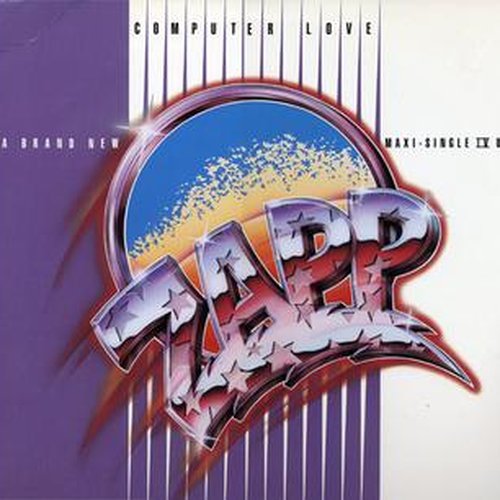
Roger Troutman's talkbox in 1986 was already a quotation from his own past, and producers have been re-quoting it ever since.
Recorded at Troutman Studios in Dayton, Ohio in 1985 and released as the fourth single from The New Zapp IV U on Warner Bros. in 1986, "Computer Love" pairs Roger Troutman's vocoder-processed guitar with Shirley Murdock and Charlie Wilson on lead vocals. Wilson's Gap Band label initially opposed the collaboration. The song peaked at number 8 on the Billboard R&B chart. The chromatic glide in the opening four bars is the most-flipped element. Producers either lift the entire instrumental bed or isolate the talkbox hook.
The lineage runs deep into modern R&B and rap. 2Pac used it on "I Get Around" in 1993 and "Thug Passion" in 1995, anchoring it in West Coast canon. Jay-Z used it on "Your Love" the same year. Notorious B.I.G. carried it onto Life After Death with "Me & My Bitch" in 2001. Ne-Yo flipped it on "U 2 Luv" in the 2010s. Jeremih and 4batz built "Sick" on it in 2018. Wiz Khalifa, Lil' Kim, Tech N9ne, Chris Brown, Redman, Fat Joe, and Mario all turned to it across two decades.
In 2024 Kamasi Washington recorded a version on Fearless Movement, confirming the melody has crossed from hip-hop and R&B into jazz repertoire. Wikipedia reports approximately one hundred documented samples and interpolations across major-artist releases. Roger Troutman was shot and killed by his brother Larry in 1999 in a domestic murder-suicide. The estate has been active in clearing samples, which is why the catalogue has stayed in circulation instead of locked up.
Producers return to the talkbox melody because it carries emotional weight without requiring a lyrical context. Thirty-eight years on, no synth preset has replaced it.
---
Lineage: Troutman's talkbox in 1986 became West Coast warmth's permanent signature and 2024 jazz finally caught up.

The Vocal That Built Dance Music
Robin S. recorded the vocal in 1990 and it failed. StoneBridge rebuilt the track in 1993 and accidentally built the most interpolation-friendly hook house music ever produced.
The original 1990 release on UK label Champion Records flopped. Robin Mayhem-Stone, professionally Robin S., had written and cut the vocal for "Show Me Love" with songwriters Allen George and Fred McFarlane, and the track went nowhere. Swedish producer StoneBridge picked it up in 1992 for a European license bid, discarded everything except the vocal and kick drum, and replaced the bassline with an accidental organ preset on his Korg M1. The new mix went top five on the Billboard Hot 100 in 1993. Rolling Stone ranks the StoneBridge version number 9 on its 200 Greatest Dance Songs of All Time list.
The vocal isolates cleanly, which is why producers cannot leave it alone. Jason Derulo built "Don't Wanna Go Home" around it in 2011. Kid Ink and Chris Brown sampled it on "Show Me" in 2013, the use Robin S. has called her favourite. Sam Feldt's 2015 deep-house rework hit number 1 in multiple territories. David Guetta and Showtek interpolated it on "Your Love" in 2016.
The 2022 moment was the recontextualisation. Beyonce sampled the StoneBridge remix directly on "Break My Soul," the lead single from Renaissance, and Charli XCX interpolated the hook on "Used to Know Me" from Crash within months. Two of the biggest pop records of the year reached back to a 1993 dance hit independently. Beyonce repositioned the record from house nostalgia into Black queer club music lineage, and the track gained years of relevance overnight.
Allen George and the estate of Fred McFarlane, who died in 2016, hold the writing credits. Robin Maynard retains the master vocal rights and has performed the song internationally on tour for thirty years.
---
Lineage: When Beyonce reached back to 1993 for her defining 2022 statement, this is the vocal she chose above everything else the era produced.
The Slow Jam Prince Never Owned Alone
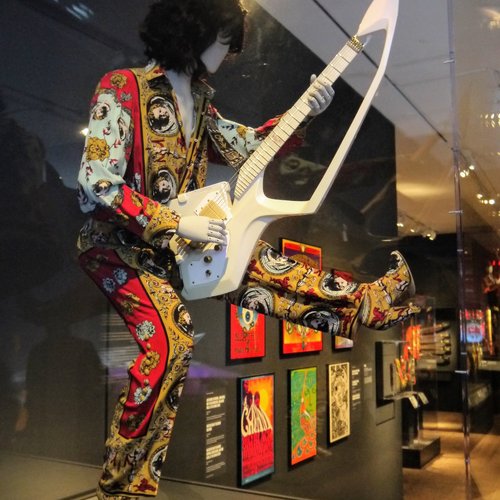
The closing track on Sign o' the Times became the slow jam that two generations of R&B producers measured themselves against.
Recorded November 19, 1986 at Sunset Sound in Hollywood, "Adore" closes Prince's 1987 double album Sign o' the Times. Six minutes long. Never released as a single. Eric Leeds on saxophone, Atlanta Bliss on trumpet, and Prince playing Hammond organ, Ensoniq Mirage, Prophet VS, and bass guitar simultaneously. The Linn LM-1 drum machine swings against the live horn section. Rolling Stone ranked it number 431 on the 500 Greatest Songs of All Time.
Prince was famously hostile to sampling during his lifetime, which is why "Adore" passed through the 1990s and 2000s as influence first and direct quotation a distant second. Carmen Electra's Prince-produced "All That" carried a direct sample. Usher's "U Got It Bad" in 2001 carries allusions to the chord structure that critics have noted explicitly. Brent Faiyaz's slow-jam productions in the 2010s wear "Adore" DNA in their tempo, voicing, and emotional architecture. Silk, TQ, Julius Papp, and Joe Roberts all recorded covers that confirmed its standing as a benchmark.
Since Prince's death in 2016, the estate administered through Primary Wave Music has opened up the catalogue commercially. The flood of post-2016 Prince samples and interpolations is partly downstream of that change. Summer Walker and SZA's collaborators have cited "Adore" as a structural touchstone for the extended slow jam format that defines current R&B.
The horn chart and the chord voicings are what producers chase. The structure is what they study. Six minutes of love song from 1987 still sets the benchmark for how a 2020s R&B record should breathe.
---
Lineage: Prince closed his most ambitious double album with a six-minute love song and modern R&B producers still measure their slow jams against it.
The New Jack Slow Jam Everyone Has Forgotten to Stop Using
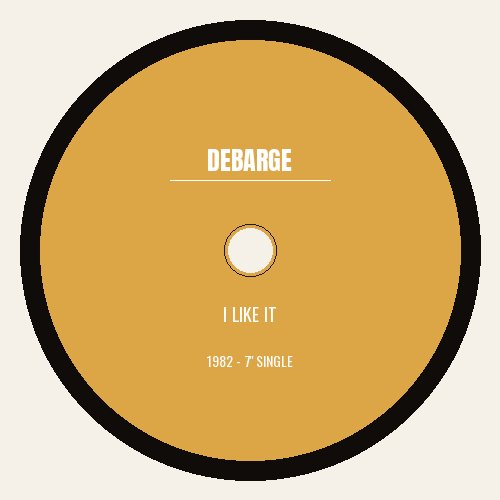
Bunny DeBarge wrote four bars of bridge for her brother to sing in 1982 and it has been the hook in somebody else's record every year since.
"I Like It" came out of Motown's studios in 1982, the breakout single from DeBarge's second album All This Love. Co-produced by El DeBarge and Iris Gordy, Berry Gordy's daughter-in-law. El composed the full musical track. Bunny DeBarge wrote the bridge that became the song's permanent afterlife. The number peaked at number 2 on the R&B chart and number 31 pop, the group's first mainstream breakthrough.
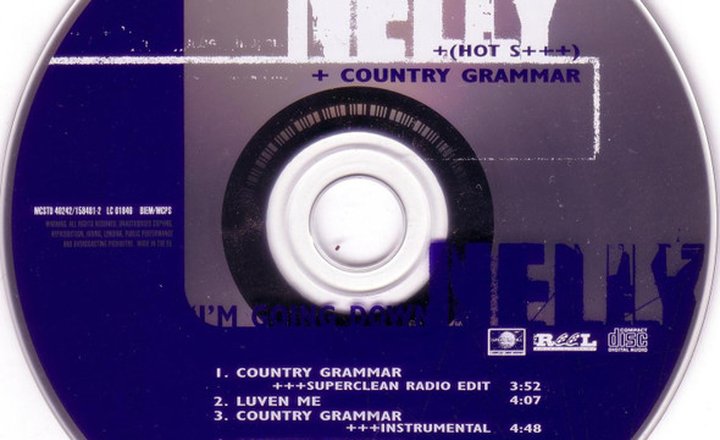
The four-bar falsetto bridge is the sample target. El holds the note clean, sings about combing hair and stylish clothes and the little things you do, and the percussion drops out for just long enough that producers can isolate the vocal cleanly. Wreckx-n-Effect alluded to it on "Rump Shaker" in 1992. Grand Puba sampled it in 1994. Warren G in 1999. The crossover moment came with Nelly's "Country Grammar" in 2000, the breakout pop single that introduced the bridge to a Gen Y mass audience. Nelly returned to the same source on "My Place" the following year. LL Cool J flipped it in 2001.
Rihanna's "Rude Boy" in 2010 interpolated the bridge straight into a number 1 pop record, confirming its mainstream currency twenty-eight years after the original. Beyonce has cited the bridge in live performances. Motown's catalogue management through Universal Music Group keeps clearance straightforward, so each generation's producers get to use it without legal drama.
The bridge works in hip-hop, R&B, pop, and dance because it has no genre lock. It is a love letter in four bars and falsetto sits outside fashion.
---
Lineage: El DeBarge sang those four bars in 1982 and they have been the bridge in somebody else's song every year since.
The Hook That Never Ages
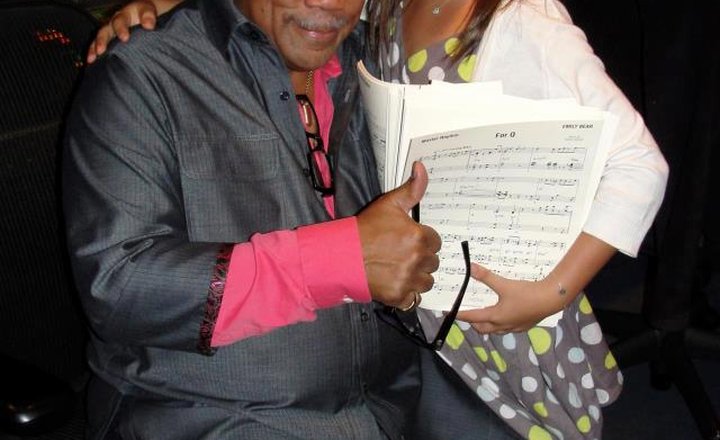
The Brothers Johnson covered a Shuggie Otis song in 1977, Quincy Jones produced it at the peak of his powers, and Beyonce confirmed in 2003 it had no expiry date.
Shuggie Otis wrote "Strawberry Letter 23" for his 1971 album Freedom Flight. George Johnson discovered it while dating one of Otis's cousins, the Brothers Johnson cut their version for the 1977 album Right on Time, and Quincy Jones produced. Lee Ritenour recreated Otis's original fingerpicked guitar intro, processed with heavy studio compression. The 12-inch single was pressed on red, strawberry-scented vinyl. It hit number 5 pop and number 1 on Soul Singles.
The four-bar guitar-and-bass intro is the lift point. The off-beat Fender Rhodes accent in the verse is a secondary target. Tevin Campbell recorded a new jack swing cover in 1992. Beyonce sampled both this and Bootsy Collins's "I'd Rather Be with You" on "Be with You" from her 2003 album Dangerously in Love, produced by Rich Harrison, the same producer who built "Crazy in Love" on the Chi-Lites brass sample on the same album. Two of Beyonce's defining solo-career singles, both built on records older than she was at the time.
Quincy Jones's production carries a compression and stereo width that modern digital tools struggle to replicate convincingly. That is why producers who want the specific quality of organic-but-lush keep returning to the 1977 source instead of recreating it. Shuggie Otis retained the songwriting credit, the Brothers Johnson hold performance rights, and Sony Music handled the Beyonce clearance through Columbia. Otis's original 1971 version has experienced a parallel streaming revival as crate-diggers track upstream of the cover.
Quincy at his peak built recordings that simply do not date. Producers have been mining the same four bars for almost fifty years.
---
Lineage: Shuggie Otis wrote the riff, Quincy Jones made it infinite, and Beyonce confirmed it had no expiry date.
The Jazz Standard Hip-Hop Built
Marcus Miller's bass note on beat one of an F-minor intro has put food on the table for producers in every decade since 1980.
Grover Washington Jr.'s saxophone melody enters first over Richard Tee's electric piano voicing in F minor. The chord progression runs Dbmaj7 to C7b9 to Fm7 to Ebm7 to Ab7, one of the most distinctive in soul music, sometimes simply called "the Just the Two of Us progression" in music theory classes. Written by Bill Withers, William Salter, and Ralph MacDonald. Released on Washington's Winelight album for Elektra in 1980. The session is a who's-who of studio jazz: Marcus Miller on bass, Steve Gadd on drums, Eric Gale on guitar, Richard Tee on piano. It peaked at number 2 on the Billboard Hot 100, blocked by "Morning Train" and "Bette Davis Eyes." Won the Grammy for Best R&B Song in 1982.
The most famous sample is also the cleanest. Will Smith built his 1997 number 1 "Just the Two of Us" on the Grover Washington intro, with Withers, Salter, and MacDonald credited as co-writers. Around the Way's "Really Into You" sampled it in 1991. Theory of a Deadman parodied it as "Two of Us (Stuck)" on the 2023 Dinosaur album. Keith Urban recorded a version for his 2026 album Flow State.
The Gen Z discovery moment came in late 2020 when "Just the Two of Us" trended on TikTok and Ralph MacDonald's granddaughter uploaded a tribute video. A 40-year-old jazz-soul track reaching young listeners as discovery, not nostalgia, is rare and it reveals what the original session was actually doing.
Three co-writers divide publishing. Withers, who died in 2020, was historically protective of his catalogue but cooperative with commercial licensing. The chord progression's sophistication means producers often interpolate instead of sampling directly, which requires separate clearances and so generates separate income streams.
---
Lineage: Marcus Miller's bass note on beat one of that F-minor intro has put food on the table for producers in every decade since 1980.
The South Bronx Post-Punk Break That Crossed Every Border
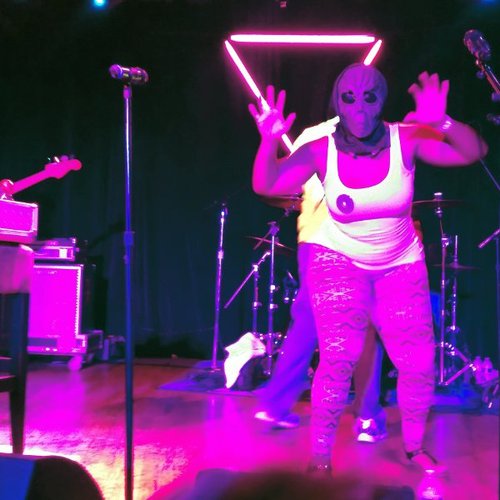
Martin Hannett had three minutes of tape left at the end of a Manchester session and the Scroggins sisters filled it with the most-sampled three minutes in post-punk.
ESG formed in the South Bronx in 1978. Renee, Valerie, Deborah, and Marie Scroggins, four sisters on vocals, drums, bass, and congas. Discovered by Ed Bahlman of 99 Records at a talent show. Signed to Factory Records after Tony Wilson saw them at New York's Hurrah club on the Upper West Side. First recording session was in Manchester with Joy Division and New Order producer Martin Hannett. According to Renee Scroggins's account in Exclaim! cited on Wikipedia, Hannett finished a session with three minutes of master tape left and asked them to fill it. They cut "UFO" on the spot.
Renee Scroggins built the band's aesthetic around James Brown's bridges. "If you could just take a song and make it just the bridge, wouldn't that be hot," she told Exclaim!. "UFO" is exactly that. Locked bass pulse, sparse percussion, a two-note guitar figure, no chorus, no verses, no song structure. Three minutes and six seconds of pure groove sitting in space. The ESG EP appeared on 99 Records and Factory in 1981. The New York Times placed it second on its best EPs of 1981 list.
The samplers list is the genre map. Wu-Tang Clan, TLC, Big Daddy Kane, Beastie Boys, Junior Mafia, Gang Starr, Kool Moe Dee, Tricky, J Dilla, MF Doom on the hip-hop side. Unrest and Liars on the indie side. Treblezine called "UFO" "one of the most sampled songs in history" in 2015. James Murphy of LCD Soundsystem said the Scroggins sisters "do things that are almost impossible to copy. They're irreducible." Karen O said the Yeah Yeah Yeahs' first EP was "largely Nick and I trying to be like ESG but with guitar instead of bass."
In 1992 ESG released an EP titled "Sample Credits Don't Pay Our Bills." It remains the most direct public statement any artist has made about the economic side of being sampled. The Factory and 99 Records rights situation, complicated by Factory's bankruptcy and Ed Bahlman's withdrawal from the industry, made early royalty streams almost impossible to pursue. Renee Scroggins retains rights to ESG's new music and has run the band ever since.
---
Lineage: Hannett had three minutes of tape left in Manchester and the Scroggins sisters built the connective tissue between the South Bronx and every dance-punk band that followed.
The Chic Bassline That Introduced Rap to the World
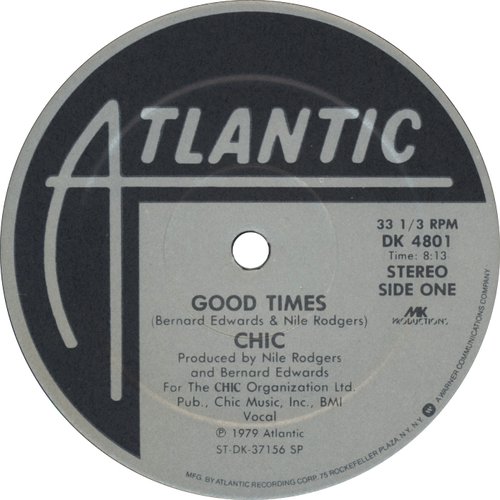
Bernard Edwards played eight bars of bassline in 1979 and accidentally wrote the first royalty dispute in commercial hip-hop history.
Chic released "Good Times" on Atlantic Records in June 1979, written and produced by Bernard Edwards and Nile Rodgers for the Risque album. It hit number 1 on the Billboard Hot 100 in August 1979. Reportedly sold over five million copies, the best-selling 45 in Atlantic Records history at the time. Billboard named it the number 1 soul single of 1979. Edwards's bassline is locked and syncopated, a funk-disco figure with a specific rhythmic accent that would prove impossible to leave alone.
Five months later, Sugar Hill Records released "Rapper's Delight" by the Sugarhill Gang. The bassline was a direct interpolation, played by session bassist Chip Shearin, who has stated he was paid $70 for fifteen minutes of work. Edwards and Rodgers threatened legal action. The settlement gave them co-writing credits but no cash payout. "Rapper's Delight" became hip-hop's first nationally charting record and the gateway through which recorded rap reached mainstream audiences worldwide.
The case set the early template for how copyright holders could reclaim credit but not necessarily revenue, and that imbalance defined the early sampling industry for the next decade. Queen's John Deacon adapted the figure for "Another One Bites the Dust" the following year. Brian May has confirmed Deacon "absolutely adored" Nile Rodgers. UK garage group Da Click interpolated it for "Good Rhymes" in 1999. Slant Magazine ranked the bassline number 3 in their Top 50 Basslines of All Time. Mixmag included it in The Best Basslines in Dance Music in 2020.
Bernard Edwards died of pneumonia in Tokyo on April 18, 1996, the night after Chic's final concert at the Budokan. Nile Rodgers has said Edwards's playing on "Good Times" was one of the most important basslines in popular music history. Without it, "Rapper's Delight" sounds different and hip-hop's commercial debut takes a different shape.
---
Lineage: Eight bars of disco bassline carried recorded rap onto the Billboard Hot 100 and the legal dispute set the template for credit-without-cash that defined the early sampling era.
The Iron Melody That Built Electro
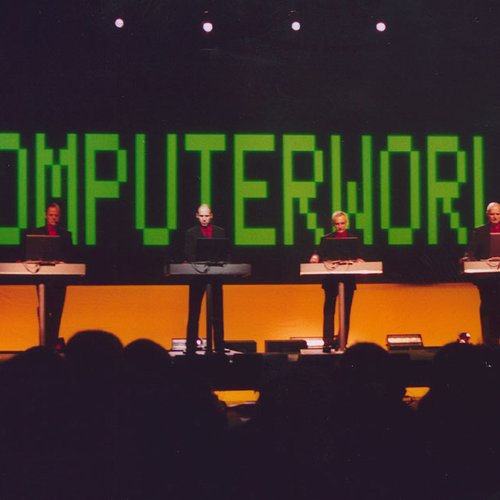
Kraftwerk recorded a counting song for the album Computer World in 1981, and Arthur Baker took it to the Bronx and built electro-funk on top of it.
"Numbers" sits on the second side of Kraftwerk's Computer World, recorded at Kling Klang Studio in Dusseldorf and released on EMI in May 1981. The track is less a song than a rhythmic demonstration, a counting vocal in multiple languages over a mechanical electronic grid. No swing. No human warmth. Total rigidity by design. Computer World was Kraftwerk's eighth studio album, the moment when their pure-machine aesthetic crystallised.
Producer Arthur Baker heard the track played at the Music Factory in Brooklyn. His account, cited in Wikipedia's "Planet Rock" article sourcing Buskin's 2008 interview, is precise. "Black guys in their twenties and thirties asking, 'What's that beat?' So I knew that if we used that beat and added an element of the street, it was going to work." In 1982 Baker took Afrika Bambaataa and Soul Sonic Force into Intergalactic Studios in New York and rebuilt the rhythm on a Roland TR-808. John Robie replicated the synth tones. The melody came from "Trans-Europe Express." The beat came from "Numbers."
The result was "Planet Rock," the record that founded electro-funk and set the template for TR-808 hip-hop production through the mid-1980s. Detroit techno's architects, Juan Atkins, Derrick May, and Kevin Saunderson, would later cite Computer World specifically as the foundational document of their aesthetic. The cold electronic grid that defines techno's first wave runs straight back to "Numbers."
Kraftwerk were credited as composers on "Planet Rock" after the fact, a settlement Baker has discussed in interviews. They did not sue. They got publishing. They also got something more interesting: the realisation that Black American producers were already listening, already paying attention, already ready to take Kraftwerk's pure machine aesthetic and make it street music.
---
Lineage: Four German men built a counting song on a TR-808 grid and Afrika Bambaataa turned it into the rhythm template of electro.
The Squealing Synth That Defined the West
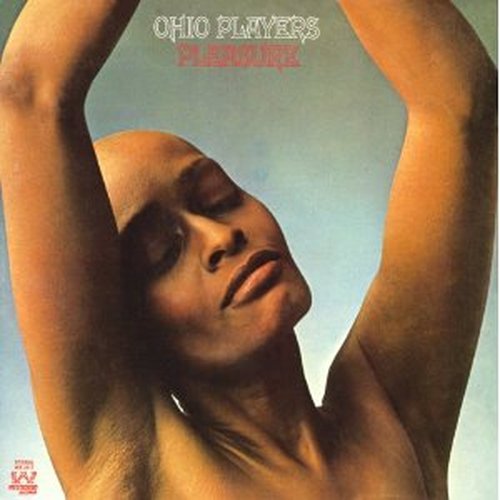
Walter Junie Morrison hit a preset on an ARP Pro Soloist in 1973 and handed Dr. Dre the most recognisable frequency in West Coast hip-hop.
Ohio Players released "Funky Worm" on Westbound Records in 1973, from the Pleasure album. The track hit number 1 on the US R&B chart. The hook is a high-pitched, squealing synth solo played by Walter "Junie" Morrison on an ARP Pro Soloist, a monophonic synthesiser with preset sounds. Morrison chose the setting that produced the distinctive whine. In a Red Bull Music Academy interview with Jeff Chairman Mao in 2015, Morrison confirmed the specific technique. The tone is unmistakably synthetic and no other instrument sounds like it. That uniqueness is exactly why producers seized on it.
The ARP solo became the signature frequency of West Coast G-funk's high end. N.W.A. sampled it on "Dope Man" in 1987 and "Gangsta Gangsta" on Straight Outta Compton in 1988. Ice Cube used it on "Wicked" in 1992 and "Ghetto Bird" in 1993. De La Soul put it on "Me Myself & I" in 1989. Kris Kross sampled it on "Jump" in 1992. The Wikipedia G-funk article states explicitly that the solo "provided the blueprint for G-funk's distinctive synth tone in later years." Dr. Dre, who rarely sampled directly and preferred to replay sounds, replicated the timbre across his early-1990s productions.
Google placed "Funky Worm" inside the virtual record collection for its 44th Anniversary of Hip-Hop Doodle on August 11, 2017, institutional recognition of the track's centrality. Morrison himself moved on to work with George Clinton's Parliament-Funkadelic collective, contributing to "Atomic Dog" and other 1980s P-Funk records. He died in February 2017.
The Ohio Players' rights situation through their Westbound era was complex, but high-profile clearances for Kris Kross and N.W.A. went through commercial channels. The squeal itself, that specific frequency at that specific pitch, became one of the defining sound signatures of an entire coast's hip-hop production.
---
Lineage: Morrison hit a preset on an ARP synthesiser in 1973 and twenty years later Dr. Dre was building Doggystyle around the same frequency.
The B-Side That Ran New York
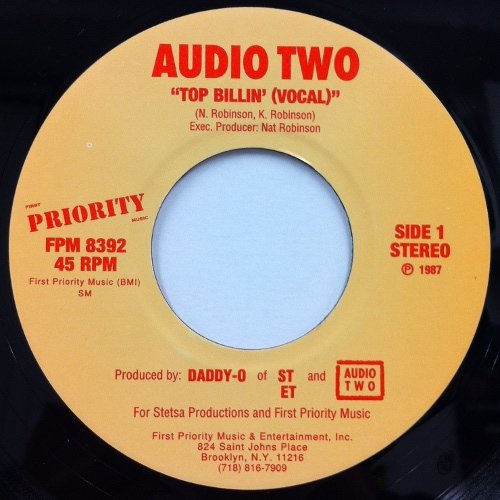
A B-side from a teenage Brooklyn duo defined the drum sound of East Coast hip-hop for the next decade.
Audio Two were Kirk Robinson, also known as Gizmo, and his brother Milk Dee. Released October 15, 1987 on First Priority Music as the B-side to "Make It Funky." Recorded before First Priority signed its distribution deal with Atlantic Records. Produced by Daddy-O of Stetsasonic alongside the duo themselves. The drum pattern is a punchy, unadorned 808-style figure with almost no embellishment. Simple, dry, authoritative. The vocal delivery mirrors the beat exactly: clipped, confident, ornament-free.
The record codified the stripped-back East Coast drum aesthetic that would run New York hip-hop through the golden age. Where Rick Rubin's Def Jam sound was loud and rock-influenced and maximalist, "Top Billin'" demonstrated the opposite proposition: let the beat breathe, let the MC work, leave space. That principle runs directly into the production DNA of DJ Premier, Pete Rock, Large Professor, and the entire 1989-1995 Boom Bap aesthetic.
Wikipedia, citing the Detroit News in November 2022, states elements of "Top Billin'" have been sampled or interpolated in more than 300 songs. 50 Cent built "I Get Money" on a direct sample in 2007. Jay-Z and Kanye West interpolated it on "Otis" in 2011. Mary J. Blige's "Real Love" used it in 1992. Rolling Stone ranked it number 43 on their 50 Greatest Hip-Hop Songs of All Time in 2012. About.com voted it number 8 in their Top 100 Rap Songs. The book "1001 Songs You Must Hear Before You Die" carries an entry on it.
Kirk Robinson is credited as sole writer. No major copyright disputes documented, in part because the duo and First Priority went about their business quietly and the influence operated as much through aesthetic adoption as through direct sampling. Audio Two never had another commercial hit of comparable size, but the drum template they laid down ran the borough for ten years.
---
Lineage: A 1987 B-side from a teenage Brooklyn duo became the drum blueprint for every East Coast record that mattered in the next decade.
The Talkbox That Bottomed Out the West Coast
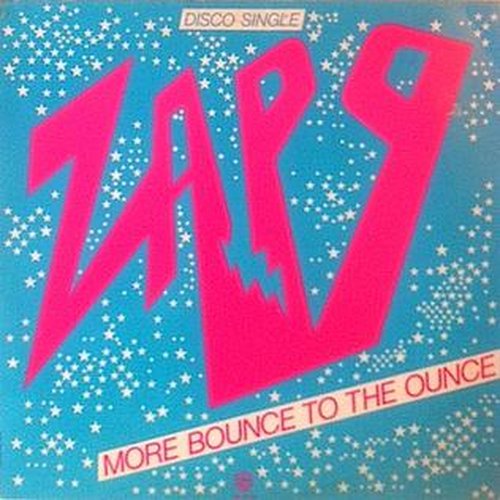
Roger Troutman ran a guitar through a talking box in Dayton, Ohio in 1980 and invented the voice of the West Coast.
Recorded in 1979, released September 1980 on Warner Bros. The album version of "More Bounce to the Ounce" runs 9 minutes 25 seconds. Roger Troutman wrote, arranged, composed, and produced. Bootsy Collins produced alongside. Peaked at number 2 on the US R&B chart. The title was lifted from a 1950s Pepsi advertising campaign. The defining element is Troutman's talkbox-modulated bass guitar, a wobbling voice-like tone that blurs the line between instrument and human speech.
Zapp were a Dayton, Ohio funk group built around the Troutman family. Roger's talkbox technique, running guitar through a vocoder-style device to produce a robotic singing voice, became the most imitated sound in West Coast hip-hop production. EPMD sampled "More Bounce" directly on "You Gots to Chill" in 1988. Ice Cube used it on "Friday" in 1995. Notorious B.I.G. flipped it on "Going Back to Cali" on Life After Death in 1997. MC Breed and DFC built "Ain't No Future in Yo' Frontin'" on it in 1991.
Chris Frantz of Tom Tom Club confirmed in his 2020 memoir "Remain in Love" that "More Bounce" directly inspired the bassline of "Genius of Love" in 1981, which itself became a major sample source for Mariah Carey, Grandmaster Flash, and dozens of others. Dr. Dre and the West Coast producers of the early 1990s often replicated the talkbox sound live instead of sampling directly, which is why the timbre of G-funk feels indebted to the record even when the record itself is not credited.
Roger Troutman was shot and killed by his brother Larry in Dayton on April 25, 1999 in a murder-suicide. Larry then took his own life. The catalogue is administered by their estate. Where "Funky Worm" gave G-funk its high-pitched whine, "More Bounce" gave it its low-end wobble. Troutman's playing made a machine sound human and hip-hop producers spent a decade chasing that quality.
---
Lineage: A vocoder pedal on a bass guitar in Dayton became the voice of the West Coast and Dr. Dre spent a decade chasing the feeling without ever fully reaching it.
The P-Funk Groove That Built the West
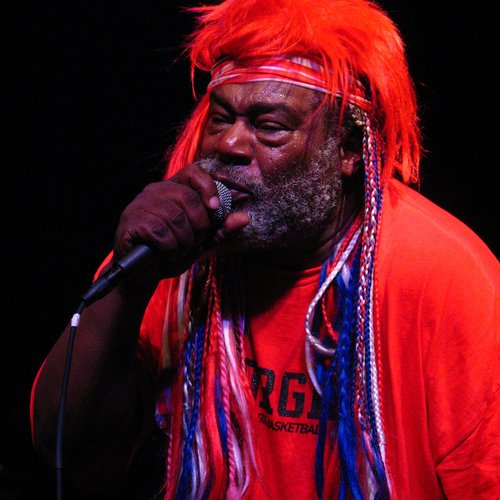
George Clinton walked into the studio drunk on a single night in January 1982 and the song that came out gave West Coast rap its mythology.
Released on Capitol Records in December 1982 from the Computer Games album. The session story comes from court testimony in Bridgeport Music v. UMG, Sixth Circuit, November 2009, cited on Wikipedia. David Spradley laid down initial tracks. When George Clinton arrived "he had been partying pretty heavily, so he was feeling pretty good." His vocal was recorded the same night while Spradley and Garry Shider stood either side of him at the microphone. No written score existed. The track was built live in the room. It hit number 1 on the US R&B chart, displacing Michael Jackson's "Billie Jean."
The hook is the synth bass pulse, the vocoded "bow wow wow, yippie yo, yippie yea" refrain, and the rhythmic "dog" punctuation. Snoop Dogg's entire vocal persona channels Clinton's dog mythology directly. The "bow wow" refrain runs through multiple Doggystyle tracks. Dr. Dre's production on The Chronic in 1992 and Doggystyle in 1993 draws heavily on the P-Funk aesthetic with "Atomic Dog" as a primary reference point for the bass-heavy, lazy-groove West Coast sound.
The legal story is also the record's story. In Bridgeport Music v. UMG, a jury found wilful copyright infringement when Public Announcement's "D.O.G. in Me" used the "bow wow wow" refrain and rhythmic dog panting in 1998. The court awarded $88,980 in statutory damages. The case established a significant sampling-law precedent: even short repeated phrases and rhythmic vocal effects can constitute protectable expression. It is one of the foundational cases of modern sampling jurisprudence.
"Atomic Dog" is also the unofficial theme of the Omega Psi Phi fraternity, a connection Clinton acknowledged in a 2023 statement quoted in Wikipedia. The record sat at the intersection of P-Funk's commercial wind-down and G-funk's coming arrival. Without "Atomic Dog," Snoop Dogg's persona, the dog iconography, and the laconic West Coast MC archetype all look different. The most-quoted dog refrain in popular music came out of one drunk night in 1982.
---
Lineage: Clinton built it drunk on a single night and Snoop Dogg built a whole career out of its mythology.
The Party Record That Became Hip-Hop's Most Quoted Text
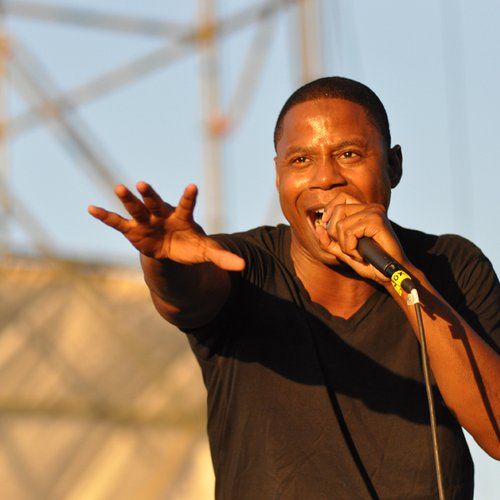
Slick Rick woke up, got dressed, and delivered the verse that hip-hop has been quoting for forty years.
Released August 13, 1985 on Fantasy Records as the B-side to "The Show." Doug E. Fresh provides the beatboxed instrumental. Slick Rick, then performing as MC Ricky D, delivers the verse. There is no traditional drum break to sample. The "break" is the entire performance: the cadence, the storytelling, the morning-routine narrative with self-aggrandising detail, and a series of catchphrases that became hip-hop's most-quoted phrases. La di da di, we like to party. Ricky Ricky Ricky, can't you see. Hit it.
The list of records built on those phrases is the genre's catechism. Snoop Doggy Dogg's "Lodi Dodi" on Doggystyle in 1993 is a near-complete re-recording produced by Dr. Dre. Notorious B.I.G.'s "Hypnotize" in 1997 interpolates "Ricky Ricky Ricky" as "Biggie Biggie Biggie." Beyonce sampled the full track on "Party" featuring Andre 3000 in 2011. Miley Cyrus interpolated the title line in "We Can't Stop" in 2013. N.W.A. sampled the "Hit it!" intro phrase on "Gangsta Gangsta" in 1988. Naughty by Nature did the same on "O.P.P." in 1991. Rob Base & DJ EZ Rock used it on "It Takes Two" in 1988. BTS quoted the title line on "Mic Drop" in 2017.
In April 2024 the Library of Congress selected "La Di Da Di" for preservation in the National Recording Registry as a recording "culturally, historically, or aesthetically significant." Billboard reported the selection on April 16, 2024. The Wikipedia article documents forty-plus specific subsequent recordings.
The original exists in two versions because of a clearance issue with "Sukiyaki" by A Taste of Honey, which is why CD reissues remove the sung refrains. The scale of subsequent interpolation has meant Slick Rick and Doug E. Fresh have collected writer credits across an enormous body of derivative work. They built hip-hop's living text. Forty years later the genre is still rewriting it.
---
Lineage: Slick Rick woke up, got dressed, and the verse hip-hop has been quoting for forty years was on tape by sundown.
The Beat That Told Arthur Baker It Would Work
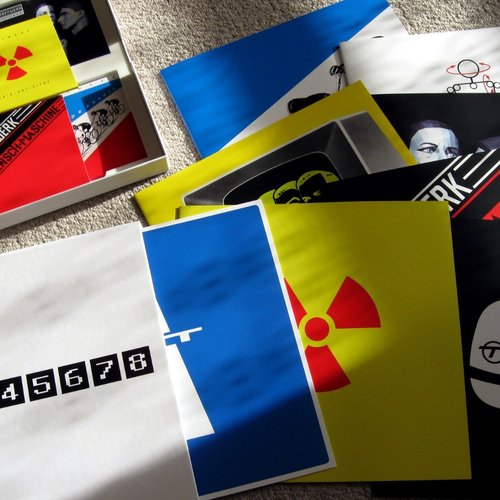
Ralf Hutter composed the melody for a train timetable in 1977 and Afrika Bambaataa turned it into the entire sonic DNA of electro.
Kraftwerk recorded "Trans-Europe Express" at Kling Klang Studio in Dusseldorf and released it on Kling Klang and EMI in April 1977. The long album version runs 13 minutes 44 seconds. Written by Ralf Hutter with lyrics by Hutter and Emil Schult. The synth melody is a locked, hypnotic sequence built from analogue modular synthesis, sitting on a rigid mechanical pulse with no swing and no human warmth. The Trans Europ Express rail system was a literal subject. Kraftwerk performed it with near-motionless stage presence, a deliberate act of anti-showmanship that put the machine at the centre.
In 1982 Arthur Baker took the melody, paired it with the rhythm of "Numbers," and built "Planet Rock" with Afrika Bambaataa and Soul Sonic Force at Intergalactic Studios in New York. John Robie replicated the Kraftwerk synth sounds on a Roland TR-808. The record founded electro-funk. The lineage that follows runs through Planet Patrol's "Play at Your Own Risk" later in 1982, then onward to Miami Bass, then to the entire TR-808-driven blueprint of mid-1980s hip-hop production.
WhoSampled lists "Trans-Europe Express" in approximately 200 documented samples. The Wikipedia "Planet Rock" article cites Brewster and Broughton's 1999 DJ history "Last Night a DJ Saved My Life" for the session details and Mao 2007 for the early production decisions. Kraftwerk were credited as composers on "Planet Rock" after the fact. Baker has discussed the settlement in interviews. The band did not sue. They got the credit.
Without the Trans-Europe Express melody feeding "Planet Rock" there is no electro-funk template. No TR-808 as a genre-defining drum machine in hip-hop. No Miami Bass lineage. The record is one of the most documented cross-cultural collisions in recorded music: four German men in Dusseldorf building a song about European rail, adopted wholesale by South Bronx hip-hop to define its electronic future.
---
Lineage: Ralf Hutter wrote it for a train timetable and Bambaataa carried it into the sonic DNA of every TR-808 record that followed.
The B-Boy Break That Built the Bronx Underground
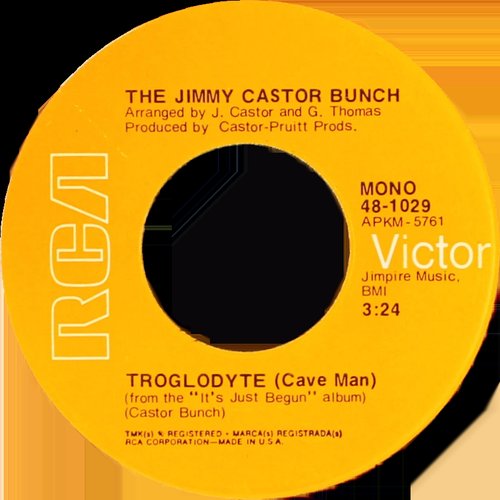
Jimmy Castor's drummer hit a percussion break in 1972 that DJ Kool Herc folded into his block-party canon, and forty years later hip-hop's underground was still cutting it up.
The Jimmy Castor Bunch released "It's Just Begun" on RCA Records in 1972 from the album of the same name. Castor was a Bronx-born saxophonist and bandleader who had already had a top-twenty hit in 1966 with "Hey Leroy, Your Mama's Callin' You." The track is built around a hard percussion break, congas and timbales trading with the drum kit, that producers and DJs identified almost immediately as one of the cleanest looping breaks available. It is referred to in hip-hop production circles simply as "the B-Boy break" because Kool Herc and the early Bronx party DJs used it as breakdance fuel alongside "Apache."
The samplers list is dense and runs deep. Wikipedia confirms "It's Just Begun" as a foundational B-Boy staple with documented uses across the band's catalogue and the track itself running into hundreds of samples through the 1980s and 1990s. Crucially, the record sat under the entire Bronx underground sound, the one that did not chart and did not crossover but defined the borough's identity. Producers who wanted a percussion break that felt explicitly tied to b-boy history reached for this one instead of the more commercial breaks.
Castor died in January 2012. His estate handles the publishing, which by then had been licensed through hundreds of cleared samples. The full song appears in the 1983 hip-hop documentary "Wild Style," cementing its status in the canon. Castor himself had a sense of humour about being mostly known to a generation that had never heard "Hey Leroy."
The original record is also a song of optimism. "It's just begun, gonna have my fun," Castor sings. He wrote a song about beginnings in 1972 and the beginning he meant turned into a fifty-year afterlife he never imagined.
---
Lineage: A Bronx saxophonist wrote a song about beginnings in 1972 and Kool Herc folded it into the block-party canon that built breakdancing.
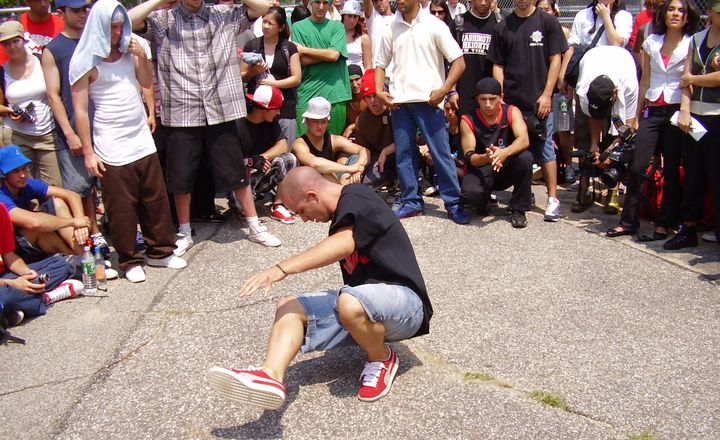
The White Rock Break Hip-Hop Stole Fair and Square
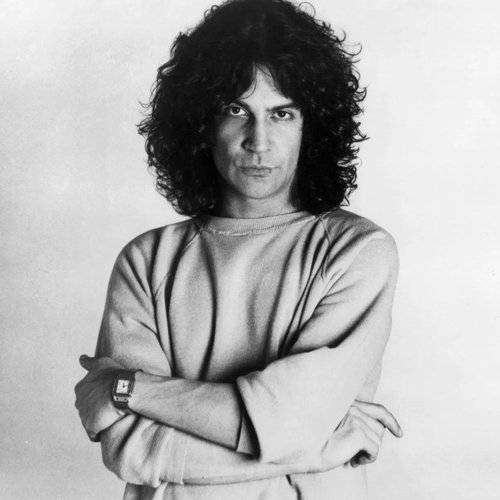
Billy Squier and Bobby Chouinard built the biggest drum sound of 1980 and hip-hop immediately stole it, used it for four decades, and eventually gave it back to rock.
"The Big Beat" opens Billy Squier's 1980 debut album The Tale of the Tape on Capitol Records. The drums are performed by Bobby Chouinard and overdubbed with Squier himself beating a snare case with his hands, the technique that produces the distinctive enormous crack on the snare hit. Roughly 116 BPM with a lot of space between hits. It never charted as a single and was largely forgotten as a standalone track during Squier's arena-rock peak.
The hip-hop adoption came through New York DJ culture. Run-DMC put it on "Here We Go" in 1985 and "Jam-Master Jammin'." UTFO used it on "Roxanne, Roxanne" in 1984, one of the earliest documented samples. Big Daddy Kane built four separate tracks on it: "Ain't No Half Steppin'" in 1988, "Put Your Weight On It," "Get Down," and "The Beef Is On." Puff Daddy's "Can't Nobody Hold Me Down" in 1997 carried it to mainstream pop radio. Jay-Z's "99 Problems" in 2003, produced by Rick Rubin, brought the break to a generation who had no idea who Billy Squier was. Dizzee Rascal sampled it on "Fix Up, Look Sharp" in 2003 in a parallel UK grime crossover. Foster the People used it for "Houdini." The Prodigy's Dirtchamber Sessions Volume One opens with it.
Wikipedia documents "almost 300 recordings" using "The Big Beat" as of 2020. The New York Post ran a feature titled "The hip-hop rebirth of Billy Squier" by Callahan in November 2013. Unlike many of the breaks in this list, "The Big Beat" came from a signed major-label artist with full publishing and master rights in place. Capitol holds the masters. Squier has collected licensing royalties across four decades and has spoken positively about hip-hop's adoption in multiple press interviews.
The story is also a quiet lesson about how sampling culture dismantled genre boundaries. Hip-hop did not care that Squier was a white rock act. It cared that those drums were enormous. By 2003 the record had crossed back into rock, pop, grime, and indie. Four decades of life from a non-charting album opener.
---
Lineage: Squier and Chouinard built the biggest drum sound of 1980 and hip-hop immediately stole it, used it for four decades, and gave it back to rock.
The Break That Defined East Coast Hip-Hop's Kick and Snare
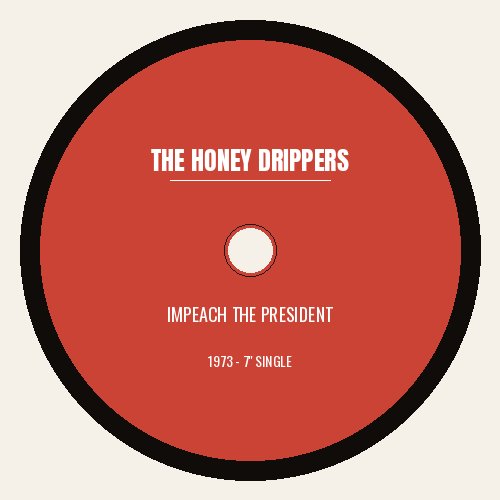
A Richard Nixon protest record from 1973 supplied the kick and snare pattern that defined golden-age East Coast hip-hop. If the historians are right, it also gave birth to the entire practice of sampling drum breaks.
Roy Charles Hammond, performing as Roy C, wrote and produced "Impeach the President" for the Honey Drippers and released it on Alaga Records on June 1, 1973. It is a funk protest song calling for the impeachment of Richard Nixon, with the band chanting the title while Roy tries to persuade them to stop. The track opens with a clean, isolated drum break, a high sharp snare crack on the backbeat and a kick drum that punches hard at the front of the beat, sitting at roughly 98 BPM. The break loops cleanly and producers prize it for its snapshot clarity.
According to music historian Mark Katz, cited in the Wikipedia article on the track, Marley Marl in 1986 "became the first hip-hop producer to sample and reconfigure a recorded drum break" using "Impeach the President" as the basis for MC Shan's "The Bridge." If Katz is correct, this is literally the first isolated drum sample in recorded hip-hop history. Audio Two's "Top Billin'" the next year is built on the same break. LL Cool J's "Around the Way Girl" in 1990. EPMD's "Give the People." Digable Planets' "Rebirth of Slick (Cool Like Dat)" in 1993. Digital Underground's "Flowin' on the D-Line" in 1991. Nas's "I Can" in 2002. Large Professor and Grand Puba freestyled over the break in a 1995 Sprite commercial.
Tuff City Records eventually acquired the masters and was aggressive in pursuing licensing. Tuff City founder Aaron Fuchs stated in Billboard in 1992 that he charged a "low four-figure sum" to license the break. A 1992 lawsuit against Sony and Def Jam was part of that enforcement. This makes "Impeach the President" unusual among the breaks in this tier: the rights holder was awake, active, and pursuing payment from at least the early 1990s onward. Whether Roy C himself saw substantial royalties from the Tuff City licensing is not well documented.
If Katz's claim holds, this single Nixon protest record from 1973 is not just a foundational break but the actual origin point of the entire practice of sampling drum breaks in hip-hop. Every Marley Marl Juice Crew production through the late 1980s sits in its lineage.
---
Lineage: A protest record from 1973 supplied the kick and snare pattern that defined East Coast hip-hop, and may have started the entire practice of sampling drum breaks.
The Break That Sat Under Half of Golden Age Rap
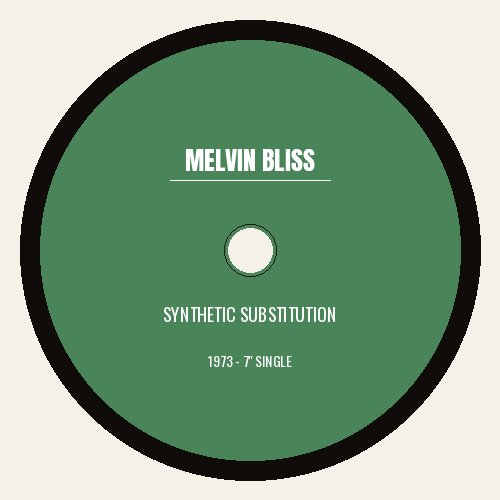
Bernard Purdie played two bars of drums as a session job in 1973 and ended up underpinning half the Wu-Tang Clan's debut album.
"Synthetic Substitution" by Melvin Bliss came out in 1973 on Sunburst Records. The track opens with a two-bar drum break performed by Bernard Purdie, one of the most-recorded session drummers in history. Purdie's pattern is clean, metronomic, and deliberately spare: a forward kick pattern, tight snare on the two and four, and open hi-hat hits that leave room to breathe. The simplicity is the point. It loops without effort and sits under almost any melody or lyric without dominating.
The record itself failed on release when Sunburst's parent company collapsed. Herb Rooney, formerly of The Exciters, had hired Bliss to sing over a composition about the dehumanisation of a computerised society. Rooney wanted "Reward" to be the A-side. "Synthetic Substitution" was the throwaway. Bliss told an interviewer for the 2011 documentary about him, "We had no idea what the song was about; we just needed a B-side." The track sat forgotten until 1986 when Ultramagnetic MCs sampled Purdie's break on "Ego Trippin'," triggering a cascade.
The lineage is golden-age rap in a single record. Naughty by Nature's "O.P.P." in 1991, the break's first pop crossover. Wu-Tang Clan's "Bring Da Ruckus," "Clan in da Front," and "Wu-Tang: 7th Chamber Part II" on Enter the Wu-Tang (36 Chambers) in 1993, three tracks from one album. Public Enemy's "Don't Believe the Hype" and "Brothers Gonna Work It Out." Pete Rock & CL Smooth's "For Pete's Sake." Onyx's "Throw Ya Gunz" in 1993. Gang Starr's "Code of the Streets." Ghostface Killah's "The Champ." Method Man's "All I Need." Kanye West and Pusha T's "New God Flow" in 2012, proving the break's durability across two decades. Wikipedia documents "over 800 songs" using it.
Tuff City Records eventually acquired the masters and handled licensing. Bernard Purdie, the session drummer who played the break, was hired for the job and received no songwriting credit, which means he had no direct royalty position on hundreds of subsequent songs. The break's appeal is instructive. It is bland in the best possible sense. No quirks. No idiosyncrasies that clash. It sits flat under whatever you put on top. That uniformity is exactly what made it the most-used drum bed of an entire era.
---
Lineage: Bernard Purdie played two bars of drums as a session job and ended up underpinning half the Wu-Tang Clan's debut album.
The "Woo! Yeah!" That Pasted Itself Onto Three Thousand Records
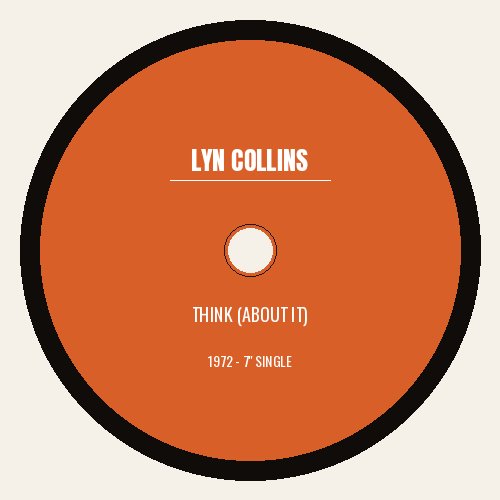
Lyn Collins screamed "Woo! Yeah!" in a James Brown studio in 1972 and accidentally gave hip-hop its most recognisable exclamation point.
Recorded at James Brown's People Records studio in 1972, with The J.B.'s backing Collins and Jabo Starks on drums. Brown wrote and produced. The song peaked at number 9 on the Billboard R&B chart and number 66 on the Hot 100. It contains two separately sampled elements that have each generated enormous sample counts independently. The first is a raw drum break with a tambourine overlay, played by Starks, that sits near the beginning of the track. The second is Collins's vocal punctuation: a belted "Woo! Yeah!" that sounds like pure spontaneous emotion, a split-second cry that became one of the most ubiquitous sample chops in hip-hop history.
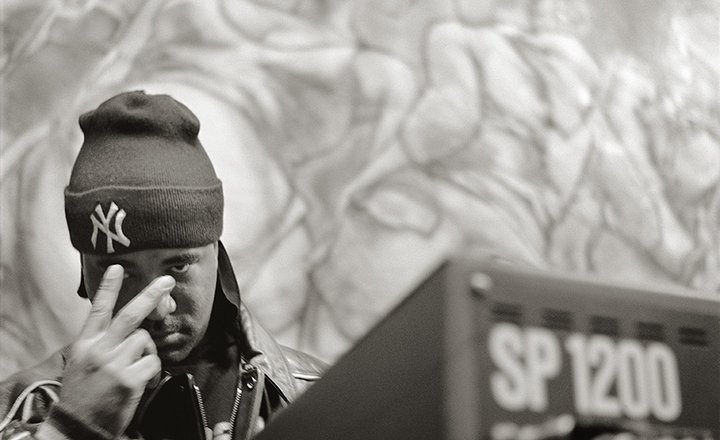
Both elements appeared on Ultimate Breaks and Beats Volume 16 in 1986, shortly before the release of the E-mu SP-1200 sampler, which turbocharged the break's adoption. Rob Base & DJ E-Z Rock's "It Takes Two" in 1988 turned the "Woo! Yeah!" into a household chorus. EPMD used it on "You Gots to Chill" in 1988. 2 Live Crew flipped it on "Me So Horny" in 1989. Sir Mix-a-Lot put it on "Baby Got Back" in 1992. Dizzee Rascal carried it into UK grime on "Fix Up, Look Sharp" in 2003. Barbara Tucker's 2017 cover hit number one on the US Dance Club Songs chart, three decades into the record's afterlife. Wikipedia states the track has been used "well over three thousand times" and the Wikipedia breakbeat article names the Think break as one of the two canonical examples of the entire genre form, alongside the Amen break.
James Brown wrote and produced, so publishing royalties from licensed samples flow through the Brown catalogue and his complicated estate. Lyn Collins earned performer and artist royalties on the original. Jabo Starks, who played the break, had no compositional credit and so no direct royalty path from the sampling. Collins toured behind the track for decades. She died in 2005.
The "Woo! Yeah!" is the single most recognisable sample moment in hip-hop. Play it to someone who has never knowingly heard rap and there is a strong chance they will recognise it from a commercial, a film trailer, a sports broadcast. Its cultural penetration goes far beyond music. Two seconds of vocal punctuation, recorded as spontaneous emotion in 1972, has been heard billions of times.
---
Lineage: Lyn Collins screamed "Woo! Yeah!" in a James Brown studio in 1972 and accidentally gave hip-hop its most recognisable exclamation point.
The B-Boy National Anthem
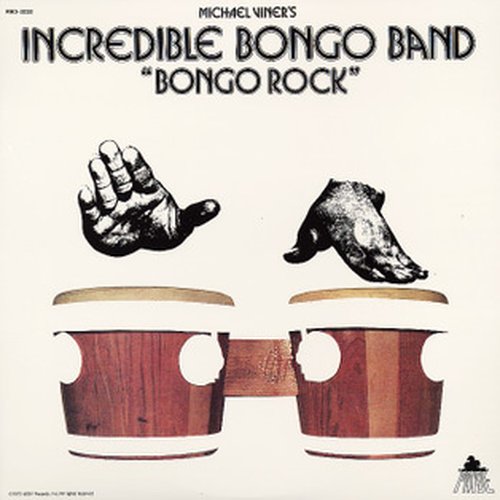
Kool Herc found the break that gave b-boys their anthem and in doing so gave breakdancing its soundtrack for the next fifty years.
The Incredible Bongo Band was assembled in 1972 by MGM Records executive Michael Viner to supplement the soundtrack of a B-movie called "The Thing With Two Heads." Producer Perry Botkin Jr. recruited working studio musicians for the sessions including drummer Jim Gordon and percussionist Bobby Hall. The cover of "Apache," originally written by Jerry Lordan and made famous in the UK by the Shadows, was recorded at Can-Base Studios in Vancouver. The session leveraged Canadian content rules. The record was not a hit on release. It languished until the late 1970s.
Roughly two minutes in, the bongo and conga players step up and the arrangement opens into an extended percussion section that runs for over a minute. The drum break proper begins when the congas drop down and Jim Gordon's kit takes the lead, playing a relatively simple but open pattern with a high cutting snare and a prominent kick. DJ Kool Herc isolated and looped this section at South Bronx block parties from 1973 to 1977, recognising that the unusually long percussion runway gave b-boys time to demonstrate footwork. By the early 1980s the loop was the de facto anthem of breakdancing.
The lineage spans the genre's history. The Sugarhill Gang's "Apache (Jump On It)" in 1981 took the loop into the mainstream. Grandmaster Flash built performance sets around it throughout the early 1980s. Nas returned to it on "Made You Look" in 2002, three decades after Herc, and on "Hip Hop Is Dead" in 2006 using the IBB's "In-A-Gadda-Da-Vida" cover. Will Smith's "Gettin' Jiggy Wit It" sampled it in 1997. A 2013 documentary, "Sample This" directed by Dan Forrer and narrated by Gene Simmons, is dedicated entirely to the cultural history of this one recording. Drum and bass producers also drew on it through the 1990s.
The rights situation is layered. The IBB recorded "Apache" as a cover of Lordan's composition, so publishing belonged to Lordan and his publishers. The recording belonged to Viner. The session musicians who played the break, including Gordon, received no specific royalties from its cultural adoption. Gordon, who had been one of the most in-demand drummers in Los Angeles, was diagnosed with schizophrenia in the 1980s, killed his mother during a psychotic break in 1983, and died in custody in 2023.
---
Lineage: Kool Herc found the break that gave b-boys their anthem and breakdancing got the soundtrack it has carried for fifty years.
The Eight Bars That Built Hip-Hop
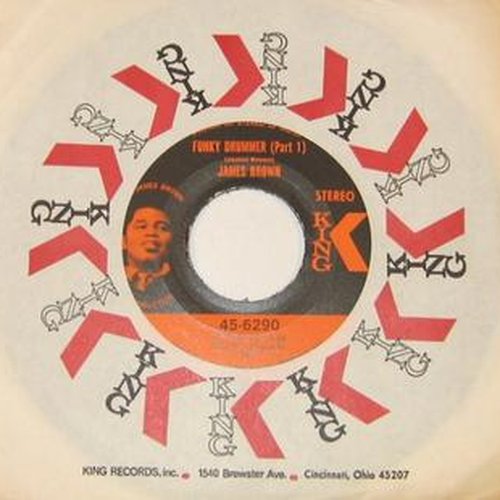
Clyde Stubblefield played eight bars of drums in a Cincinnati studio in 1969 and became the metronome of an entire genre before anyone thought to ask his permission.
"Funky Drummer" was recorded November 20, 1969 at King Studios in Cincinnati and released as a single in March 1970. The full version runs nine minutes fifteen seconds. The track is built as a long vamp, James Brown's band improvising over a one-chord groove while Brown shouts encouragement and the rhythm rolls. After more than six minutes Brown announces, "Give the drummer some." Clyde Stubblefield then plays an eight-bar unaccompanied break, a version of the groove he has been holding down for the entire track, now alone and fully exposed. The break runs at roughly 98 BPM. The pattern is built around a tight dry snare that anticipates the backbeat slightly, a spare kick, and hi-hat work that sits between open and closed in a way that gives the groove both drive and space.
The record did not receive an album release until the 1986 compilation "In the Jungle Groove," which put the break in front of a new generation of producers via the burgeoning hip-hop scene. Eric B. & Rakim's "Eric B. is President" in 1986 was one of the first documented hip-hop uses. Schoolly D's "South Bronx" the same year. Public Enemy's "Fight the Power" in 1989 and "Rebel Without a Pause" in 1987. The Funky Drummer break is structurally what makes Public Enemy sound like Public Enemy. N.W.A.'s "Straight Outta Compton" in 1988. LL Cool J's "Mama Said Knock You Out" in 1990. Beastie Boys' "Shadrach" in 1989. George Michael's "I Want Your Sex" in 1987. Ed Sheeran's "Take It Back" in 2014, four decades later.
Rolling Stone named James Brown the "Most Sampled Man in the Biz" in December 2006. Brown maintained throughout his career that sidemen were paid session wages and received no compositional credit, which meant Stubblefield earned nothing from the hundreds of songs built on his break. Stubblefield told the New York Times in 2011: "It didn't bug me or disturb me, but I think it's disrespectful not to pay people for what they use." He released a 1997 solo album titled "Revenge of the Funky Drummer." He died in 2017 of kidney failure, after years of treatment costs that were partly covered by a fundraiser organised by Prince.
Without "Funky Drummer," the production vocabulary of late-1980s rap looks different. When Marley Marl, DJ Premier, and the Bomb Squad were building the sonic language of golden-age rap, they returned to this break constantly, not just as a loop but as a reference point for what a drum break should feel like. Tight. Dry. Slightly behind the beat but never dragging. The sound that taught a generation of producers what hip-hop drums actually mean.
---
Lineage: Eight bars in a Cincinnati studio in 1969 became the metronome of hip-hop and the drummer who played them died without ever receiving a cent in writing credit.
The Seven Seconds That Built Drum and Bass
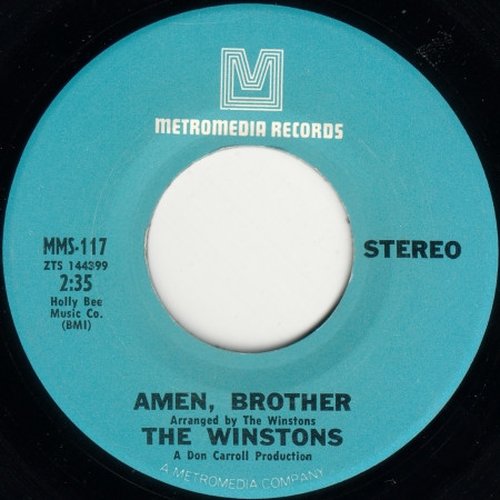
Gregory Coleman played seven seconds of nothing in particular in a half-empty Atlanta studio in 1969 and accidentally invented drum and bass.
At one minute and twenty-six seconds into "Amen, Brother," the rest of the band drops out and drummer Gregory Coleman plays a four-bar unaccompanied drum break. For the first two bars he plays the song's existing groove. In bar three he delays a snare hit, creating a pocket of tension. In bar four he leaves the first beat empty, plays a syncopated kick-and-snare pattern, and drops an early crash cymbal. The whole thing lasts seven seconds and was added to pad out a track that was running short. Nobody in the room thought it was anything more than structural filler.
The Winstons were a mixed-race soul group from Washington D.C. led by guitarist and bandleader Richard Lewis Spencer. In early 1969 they recorded "Color Him Father" in Atlanta, a gospel-inflected soul song that would win a Grammy and reach the R&B top ten. The B-side, "Amen, Brother," was an instrumental built from a gospel hymn and a guitar riff Curtis Mayfield had played for Spencer. By Spencer's own account the band composed it in roughly twenty minutes. The Winstons broke up the following year. The break sat dormant until it appeared on Ultimate Breaks and Beats Volume 1 in 1986, pitched down from 45rpm to 33rpm. That is the version jungle producers used.
The lineage is the entire genealogy of UK electronic music after 1990. Salt-N-Pepa's "I Desire" in 1986 was one of the earliest documented samples. N.W.A.'s "Straight Outta Compton" in 1988 brought it to mainstream rap. 4 Hero's "Mr Kirk's Nightmare" in 1990 was foundational jungle. Goldie's "Terminator" in 1992 pitched and time-stretched the Amen into the template for all future drum and bass. Shut Up and Dance, DJ Zinc, Bad Meaning Good, The Prodigy with "Firestarter" in 1996, Aphex Twin's "Come to Daddy" in 1997, Pendulum's "Slam" in 2005. Oasis used it on "Champagne Supernova" in 1995. Wikipedia describes "thousands of tracks" and the figure of approximately 6,000 documented samples is widely cited across press coverage including Nate Harrison's 2004 video essay "Can I Get an Amen?" and Simon Reynolds's "Rip It Up and Start Again." In 2026 the US Library of Congress selected "Amen, Brother" for preservation in the National Recording Registry.
Richard Lewis Spencer received no royalties. Neither did Gregory Coleman. Spencer did not know the break was being sampled until 1996, by which point the three-year statute of limitations on copyright infringement had expired. He told journalists he "felt ripped off and raped" but said in 2015 it was ultimately flattering. Coleman died homeless and destitute on a Los Angeles street in 2006, with no awareness of the cultural weight his eight bars carried. In 2015 British DJs Martyn Webster and Steve Theobald set up a GoFundMe for Spencer that raised over £18,000. Spencer died in 2020. Before this seven seconds existed, jungle did not exist as a genre. Drum and bass did not exist. Breakcore did not exist. UK hardcore rave did not exist. They were summoned into being out of a Bar Four nobody in Atlanta in 1969 thought mattered. Stretch it at 160 BPM and you get jungle. Chop and rearrange its components and you get neurofunk. Slow it to 140 and stack it and you get breakcore. An entire decades-long trajectory of music was written by a drummer who never saw a penny and never knew what he had done. The most-sampled recording in human history was performed by a man who died homeless.
Lineage: A drummer in Atlanta played seven seconds of pure improvisation in 1969 and the entire trajectory of UK electronic music was written into those seven seconds.
Every modern song you love is a downstream tribute to a moment in someone's session. A drummer who held the groove. A bassist who locked a figure. A singer who let one note crack at the top. Most of those musicians never knew what they had made, and almost none of them got paid in proportion to what their playing eventually built. The Winstons died penniless. Gregory Coleman died homeless. Clyde Stubblefield never collected a writer credit for the eight bars that defined hip-hop drums. Lyn Collins did not earn from the "Woo! Yeah!" that ended up on three thousand records. Jim Gordon died in custody. Bernard Edwards collapsed in a Tokyo hotel room the night after Chic's last show. Roger Troutman was shot by his own brother.
The Amen break, the seven seconds that built jungle and drum and bass and breakcore, has generated more revenue for sample-clearance lawyers than for any Winston who ever lived. That is not a complaint about a single bad deal. That is the system. The art of sampling is also the art of forgetting, and the forgetting is structural. Producers came of age in the 1980s and 1990s with sampling tools that made it easier to lift a moment than to pay for it. The court cases came later. The settlements came later. The credits came later. The cash, when it came, came to estates and labels and lawyers, not to the players who had been hired for an afternoon and gone home.
This is one attempt to put the names back on the songs. The list is twenty-five entries long and it could be two hundred. There are at least twenty break-beats with valid claims to FOUNDATIONAL status that did not make this article. There are session players whose names never made the WhoSampled credits. There are vocalists who held a single note and watched it pasted onto records for the next four decades.
Listen to anything modern. Listen for the seven seconds someone else built. Then look up the name of the person who actually played it. That is the only honest way to listen to recorded music made after 1985. Every song is a debt and every great producer is, in some sense, a debt collector. The people they collect from rarely get to settle.